
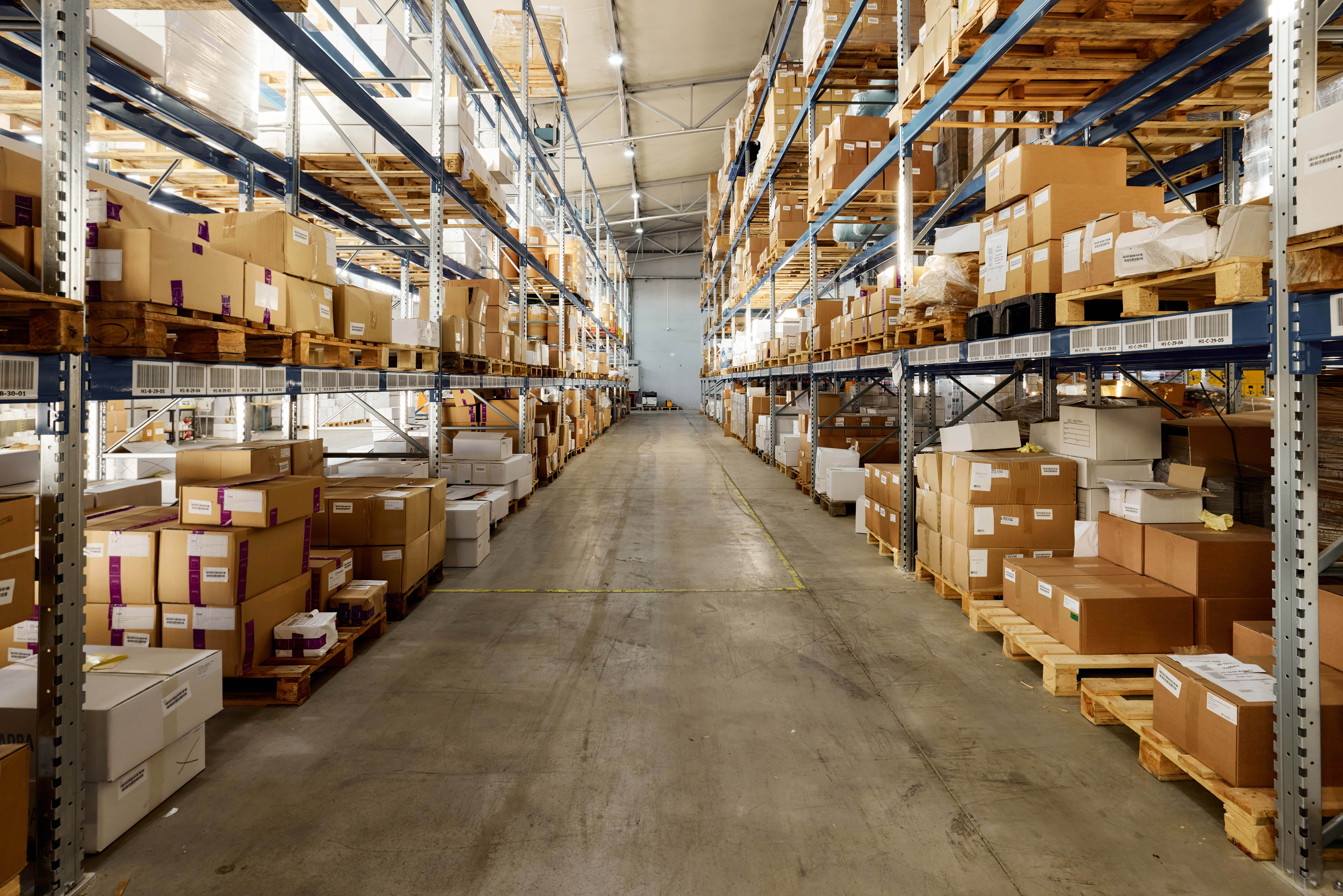
Warehouse and distribution centers play a crucial role in ensuring retailers receive the products they need in a timely manner. This year, several developments have affected the supply chain landscape, impacting operations on an international scale. Notably, three major dance brands acquired new spaces with enhanced storage and distribution capabilities, both in the U.S. and abroad. In addition, President Donald J. Trump’s 90-day pause on double-digit tariffs for dozens of countries is set to expire on August 1.
The tariffs imposed in April have already caused an increase in pointe shoe costs, which generally result in higher prices for store owners and consumers. Having more product in hand and on U.S. soil before the upcoming deadline means avoiding any additional tax hikes—beyond the fees already in effect, says Irene Wilson, managing partner of Virtisse, a pointe shoe company based in Pennsylvania.
As the world waits for the next chapters in trade agreement news, DRN takes a look at the new warehouses opened by Só Dança, Gaynor Minden, and Virtisse, all of which were in the planning stages before tariff talks even started.
Só Dança
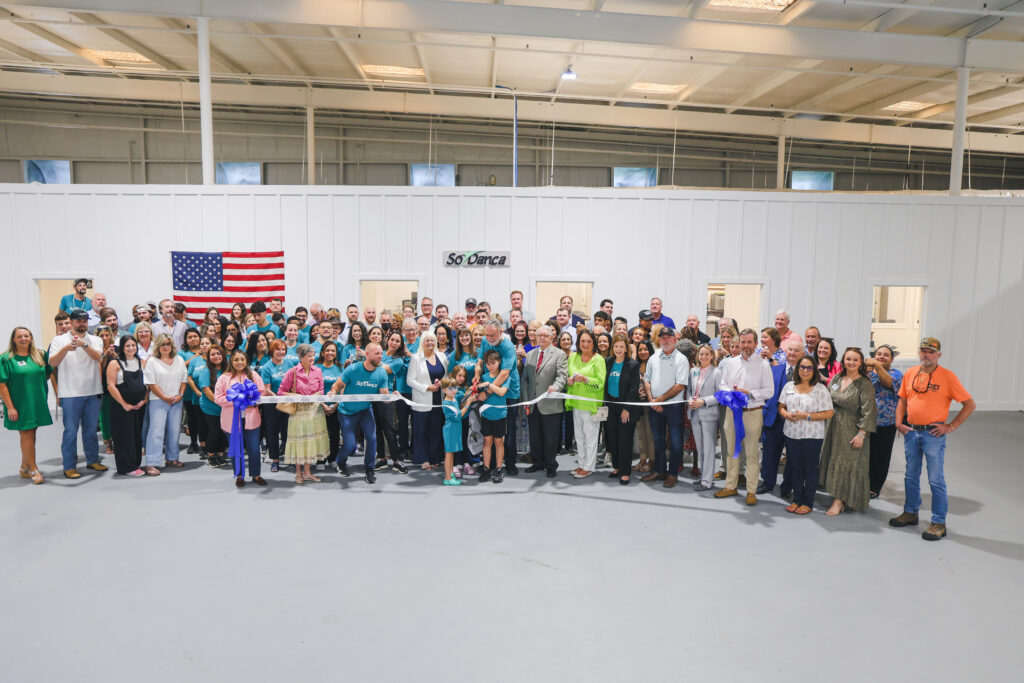
After nearly 30 years in Florida, Só Dança decided it had outgrown its 20,000-square-foot distribution center (which had not been in operation for the company’s entire history) and began searching for a new location in mid-2023. “To support continued growth, product expansion, and more efficient logistics, we made the decision to move to a new, 80,000-square-foot facility in Moultrie, GA,” says chief operating officer Helena Hines. “It provides room to scale—whether that’s adding new products or onboarding more accounts—and gives our team a more comfortable and modern workspace.”
Opening the warehouse took about eight months in total, from the initial connection with the Moultrie-Colquitt County Development Authority to the official ribbon-cutting ceremony in late June. “The whole process moved quickly, especially by economic-development standards,” says Amy Johnson, president of the development authority. Só Dança opted for a vacant warehouse, which the company transformed with renovations beginning in December 2024. The inventory move involved packing, transporting, and then unpacking 14 semi-trucks’ worth of merchandise in April. Full operations resumed in the new space in May.
Só Dança’s factories are located in Brazil and the Dominican Republic. The Georgia facility manages all U.S. wholesale and direct-to-consumer sales, along with some international distribution, while overseas centers handle the remaining international orders. “Having significantly more inventory on U.S. soil gives us greater flexibility and control,” Hines says. “It helps us respond more proactively to disruptions and protects our customers from long lead times.”
Gaynor Minden
Gaynor Minden has been producing pointe shoes since 1993 and is no stranger to having to relocate major components of its business. “We moved pointe shoe production when our U.S. factory had to permanently close because of the COVID-19 lockdowns,” says Eliza Gaynor Minden, co-founder of the brand and head of design. “It was deemed as a nonessential business.”
The factory, now located in Bosnia and Herzegovina, constructs pointe shoes using raw materials sourced from three countries. The satin is woven and dyed in Italy, shoe inserts are made in the Czech Republic and the U.S., and the brand’s trademarked Poron Performance Cushioning is from the U.S.
In early June, Gaynor Minden opened a new warehouse in the Netherlands, and it continues to operate its Massachusetts facility. In addition to providing storage space, both locations serve as distribution hubs. “Our warehouses receive goods from all over the world, and we ship to over 80 countries,” Gaynor Minden says. “It’s complicated, but we are always seeking ways to improve and innovate our processes, which is why we are excited about our warehouse in the Netherlands.”
At this time, in-stock items, including pointe shoes, ship within one to two weeks. Any changes in tariffs, however, could mean a change in shipping estimates or price adjustments. “We believe it’s too soon to know the effects of tariffs,” Gaynor Minden says. “We are continuing to monitor what the impact might be.”
Virtisse

Back in February, a building fire at Virtisse’s headquarters in King of Prussia, PA, destroyed all of the company’s furniture, computers, artwork, and inventory—including 25,000 pairs of pointe shoes. Fortunately, no injuries were reported. After the incident, the management team had no choice but to move quickly to find a new home. “Before the fire, and before any tariffs came into place, we had built up our inventory and had a 90 to 95 percent fill rate,” managing partner Irene Wilson says. “We had to find something fast or it would have been the end of the brand.”
While the U.S. side of things came to a standstill for about two months, Virtisse’s factories in Russia and China kept busy. “They focused on producing shoes required by our overseas customers, and we pushed them to continue manufacturing shoes for the U.S. so that we can be well stocked this fall,” Wilson says, adding that she’s tried to import as many of the shoes made in China before the August 1 deadline. (Russian imports currently don’t face the same level of taxation as Chinese imports, though there is talk of President Trump increasing the rates.)
Virtisse’s new headquarters, located just 10 minutes from its original site, are located within a large corporate park. During renovations, employees have been working in a temporary space within the complex, and were able to resume stateside fulfillment in May. The goal is to be in their permanent home by October. “It will be better organized because it has one really large warehouse room so that the merchandise won’t be as dispersed as it was,” Wilson says. “We are lucky that we found something as quickly as we did. And, as we continue to grow, we are not worried about the ability to get more space if we need it.”
Hannah Maria Hayes has an MA in dance education from New York University and has been writing for Dance Media publications since 2008.