
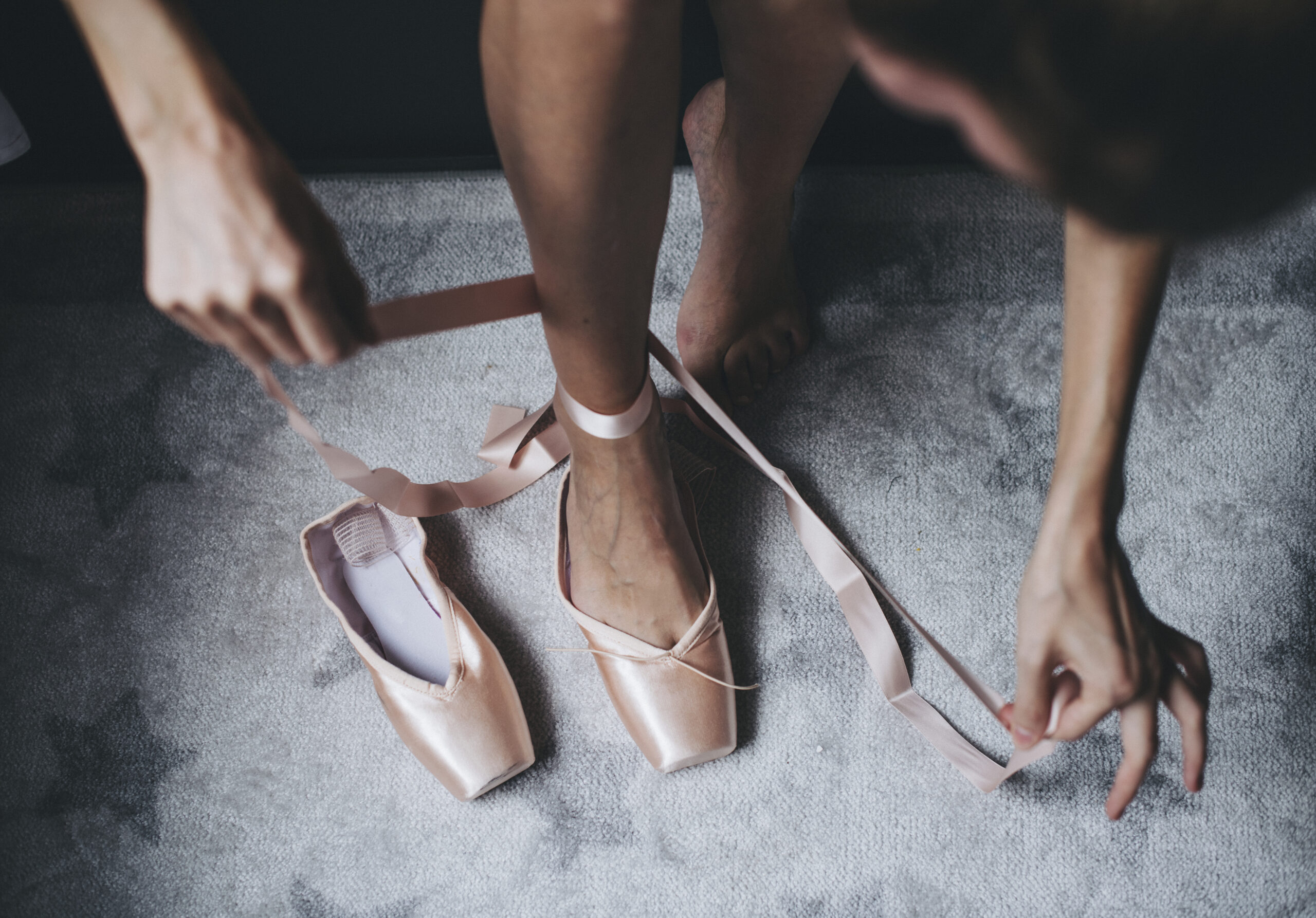
Getting cleared by a teacher to go on pointe is a milestone young dancers often wait years for. Their mothers have likely been anticipating the associated bills and blisters just as long. When those dancers finally walk into a store for their first fittings, they are the rarest kind of customer a retailer sees: already excited, already invested in the outcome, and at the very beginning of a relationship that can last the length of their dancing lives.
While many stores approach a first pointe shoe fitting as a single sale, the most successful treat it as the start of something longer. What is good for the dancer and what is good for the store ultimately align.
Getting Dancers in the Door
First-time pointe customers almost always come from the studio down the street. Teachers decide when a dancer is ready to go on pointe, which makes them the most important referral source a store has, and the easiest to alienate by going over their heads.
At my store, From the Top, a dance, cheer, and gymnastics boutique in Waco, TX, we do the opposite: We keep a public directory of local studios and will not fit a dancer for pointe until their teacher has signed off. We learn each studio’s preferences—sewing methods, approved brands, how they like dancers prepared—then honor them in the fitting room, reinforcing the teacher’s instruction instead of contradicting it. Studios notice that respect, and reward it by sending over more dancers.
At From the Top, we begin building relationships with dancers even before fittings are on the calendar, offering free pre-pointe orientations at partner studios for dancers and parents approaching their pointe invitation. The goal is to stay off the teacher’s turf—no technique is covered—and instead focus on readiness, pointe shoe anatomy, what to expect during a fitting, sewing ribbons and elastics, breaking in shoes, and recognizing when a pair has gone dead. By fitting day, the most anxious questions have already been answered, and the dancer arrives curious rather than afraid.
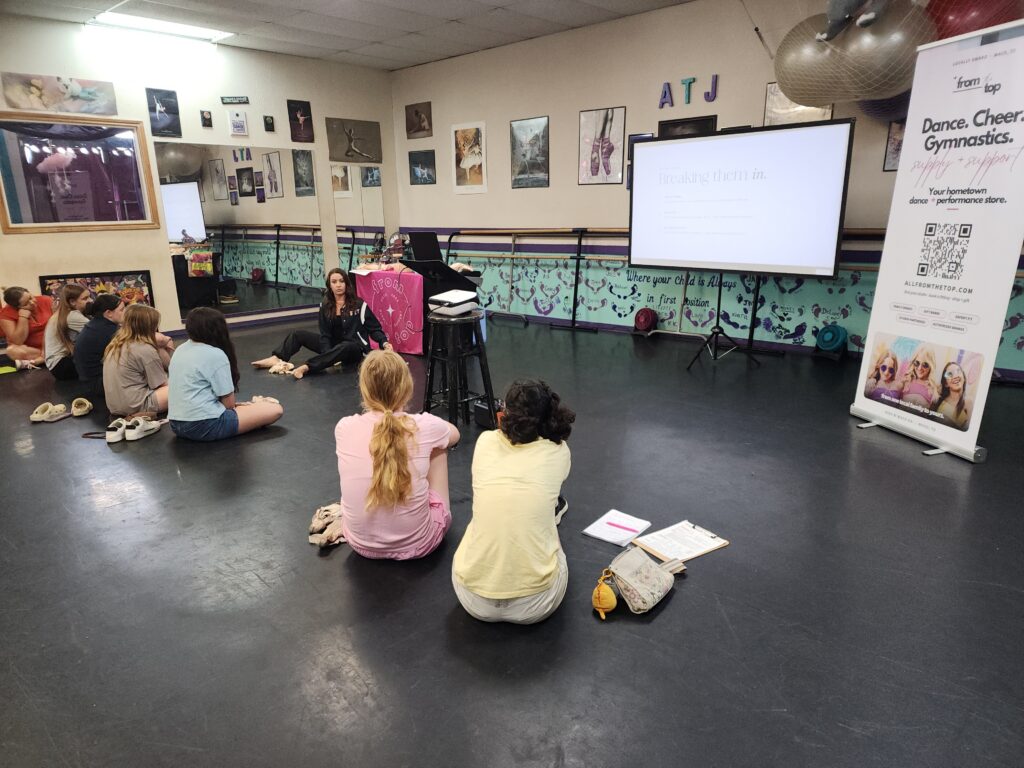
“Having the store run an orientation means my families understand the process before they even sit down for a fitting,” says Natalie George, owner of Joy’s School of Dance in Waco, TX. “It sets my pointe instructors up to be effective from day one. That partnership is a real asset to my program.”
Dancers themselves benefit as well, gaining a knowledgeable, personal guide in their own town instead of relying on an online sizing gamble or traveling three hours to a shop that has never seen them before. Katy Rahla, who owns Cinq Dance Essentials in Corpus Christi, TX, argues that the personal fitting is something dancers need to protect.
“Every fitting should happen in person, with someone who knows your studio and knows your foot. That is not a luxury. It is how pointe shoe fitting should be done,” says Rahla. “But that resource only exists if dancers show up for the stores in their own community. Support your local shop and you keep the very thing that makes your dancing safer and better. Leave it to a screen and one day it is gone.”
Make the Fitting Worth Remembering
A first fitting takes longer than a routine one, and stores that do it well refuse to rush it. Small touches carry weight: a souvenir photo of the dancer on her new pointe shoes is a meaningful keepsake for the family and honest marketing for the store, and encouraging parents to join the fitting includes them in the moment.
First-time fittings are also scaleable: When several dancers from one school reach readiness together, some stores fit them as a group, in the shop or at the studio. The store gets a roomful of new customers in an afternoon, and the dancers take a nerve-racking step together instead of alone.
Nobody understands the weight of a first fitting like the stores that have staged them for generations. Sandy’s Dancewear, with locations in Plano and Frisco, TX, opened in 1956 and is now run by the third generation of the same family.
“We have been fitting dancers for almost 70 years, and that part has not changed one bit,” says current co-owner Blake Boyse. “Dancers remember where they got their first pair of dance shoes for the rest of their lives. Give them your time, make a special experience out of it, and you are locked in. Those families come back, and then their kids come in. You cannot buy loyalty like that. You earn it one dancer at a time.”
Building Add-On Sales and Long-Term Customers
A dancer’s first pointe shoe purchase is rarely a single sale; they will also need ribbons, elastic, toe pads, and a bag. Stocking these essential add-ons from trusted brands signals a store’s credibility as a true pointe shoe destination.
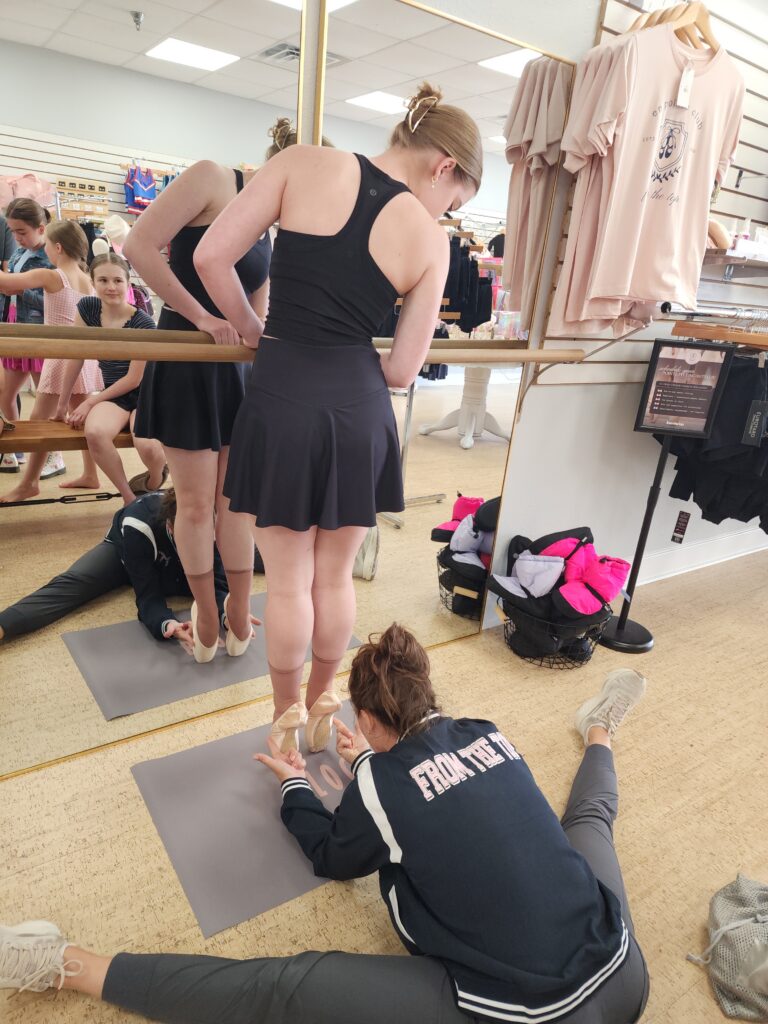
Yet the precision behind the fitting itself is often what builds the most trust and credibility. At From the Top, we run “Precision Pointe Fittings,” using a Brannock device for sizing, a goniometer for range of motion, and a structured readiness assessment. We keep all measurements on file to support future fittings. Any retailer can emulate the principle: measure like it matters, write it down, and keep each dancer’s file for years, not minutes.
“Our Precision Pointe Fitting is a full assessment, not a guess,” says Hannah Requa. A professional dancer and former principal soloist, Requa is From the Top’s lead fitter. “I measure flexibility, strength, balance, stamina, and maturity to find the right shoe, and we keep thorough records of our dancers. When they come back, I can see how those numbers have changed and adjust to where they are now. That is how you get a fit that is genuinely right, and how you keep them safe and progressing.”
That record is also the engine behind ensuring follow-up fittings, which is where the money lives. Pointe shoes die fast: a single pair can be finished in a dozen hard hours, so a dancer who had a great first experience has a reason to be back within months. A store that captures the dancer’s information and uses it (a check-in, a recheck reminder, a nudge when they are due—think of it like a dentist’s recall system) turns one sale into a decade-long relationship. The dancer gets someone watching her pointe journey, and the store gets repeat business that all but books itself.
The Bottom Line
A first pointe shoe fitting is one of the rare moments in retail where doing right by the customer and doing right by the register align. If you honor the teacher who sent the dancer, treat the fitting as the milestone it is, and remain in the dancer’s corner long after they walk out the door, you are not simply selling a pair of shoes—you are stepping into the course of their dancing life.
Jessie Reid is a dance mom and the owner of From the Top, a dance, cheer, and gymnastics boutique in Waco, TX.
Want more insight into building long-term pointe shoe relationships? Read veteran retailer Gilbert Russell’s related piece on strengthening post-fitting customer retention.