
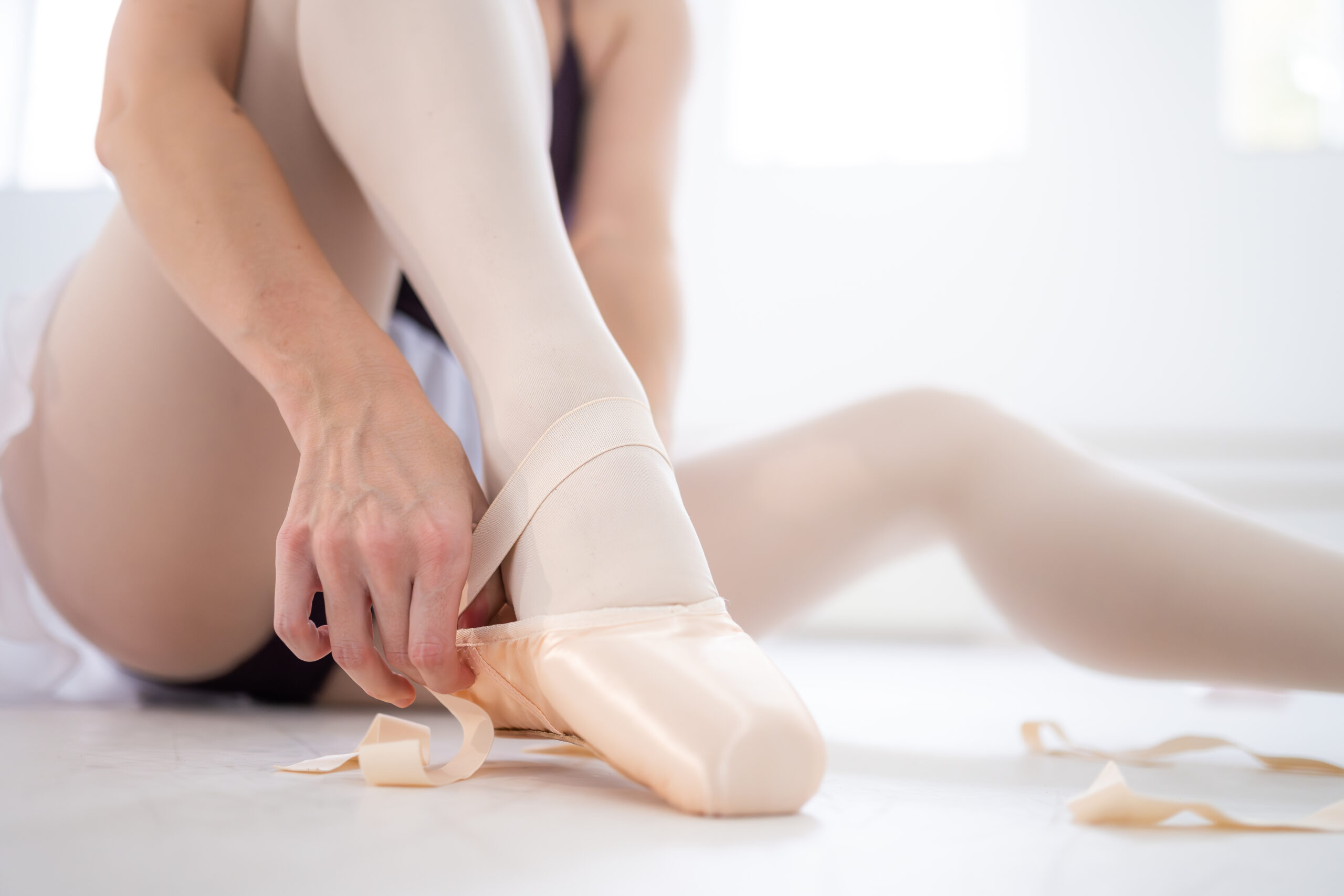
In this Dance Magazine article, writer Kathryn Holmes points out that some dancers might have slipped into the habit of simply going online and clicking “reorder” on the same pointe shoes they’ve worn for years. While convenient, experienced retailers know that this is a mistake. As Holmes explains, “even a slightly different shoe can solve a host of issues—and help dancers avoid problems in the future.”
But shoe reordering isn’t the only pitfall dancers face. To better serve your customers, here are some other common mistakes they may be prone to. Being aware of them will help you guide them away from trouble and toward better choices. —Emily May, Editor, Dance Retailer News
Mistake: Pushing Through Pain
“The culture of ballet can teach you to push through being uncomfortable,” says Josephine Lee, founder of The Pointe Shop in Santa Ana, CA, “but a lot of times, shoe-related discomfort is easy to fix.” If dancers are plagued by bruised toenails, blisters, or corns, those may be signs they need to go in for a fitting. Professional shoe fitters will likely be able to pinpoint whether the problem lies with width, length, or another aspect.
Mistake: Ignoring Injuries
A better shoe might also be the key to performing with less pain. Dr. Thomas M. Novella, a podiatrist who’s worked with dancers from New York City Ballet, American Ballet Theatre, and other companies, cites several injuries that can be caused or worsened by dancing in the wrong shoe. For instance, “a too-short vamp, where ‘toe cleavage’ is visible, will fail to support the top of the foot on pointe,” he says. One possible end result: stress fractures at the base of the metatarsals. Meanwhile, a too-high vamp can lead to jamming injuries in the ankle, as dancers push to get over the platform.
Mistake: Buying the Wrong Size
Adults’ feet can fluctuate in size—and not just from one year to the next. Novella notes that feet can change within a single season, expanding during warmer weather or periods of intense activity and shrinking again when it’s cold or the activity level decreases. He advises dancers to set aside shoes for both scenarios.
Another common issue is feet that are two different sizes. “If [dancers] get toenail bruises, blood blisters, or other signs of compression, but only on one foot, someone [should] check each foot’s size,” Novella says. The solution might be to buy two pairs at a time—one for the right foot and one for the left.
Mistake: Fearing What’s New
Even if a dancer trusts their current style, it can be worthwhile for them to look into recent releases. Each year, the industry announces innovations in materials, construction, and design. “There might be technology inserted into a shoe that could really help [them],” Lee says.
Mistake: Following a Trend
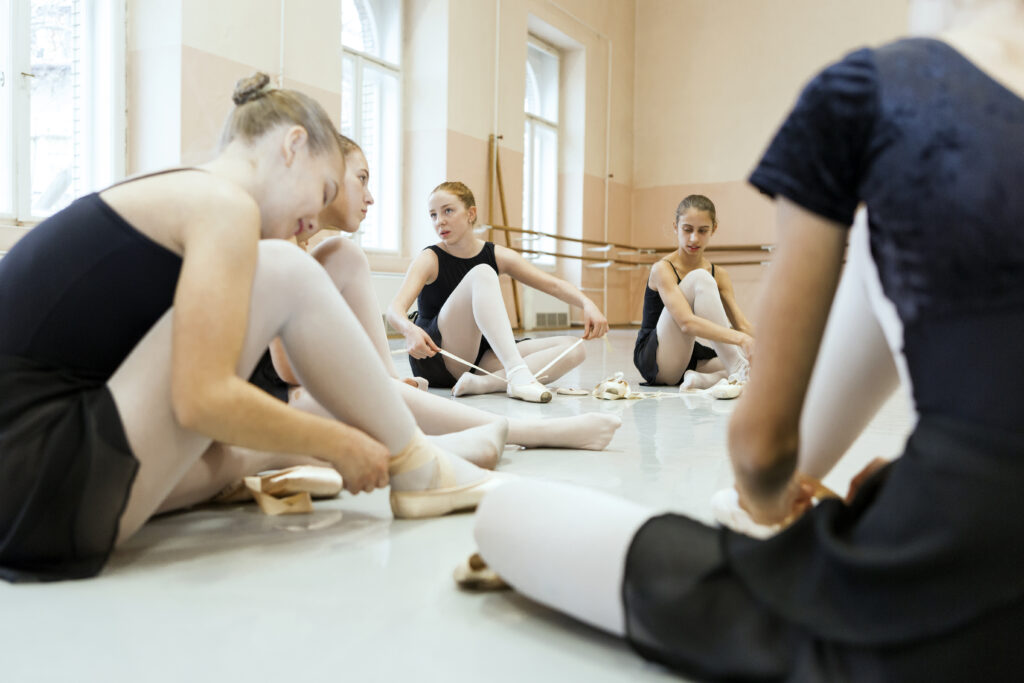
The hottest new shoe might look great on one dancer but be entirely wrong for another. “We fit to technique as well as to foot shape,” Lee says. A knowledgeable fitter will be able to guide dancers toward—or away from—the latest trends, keeping their specific needs in mind.
Mistake: Changing Everything
A dancer doesn’t have to swap out every shoe element at once. “If [they’ve] learnt that a certain platform width, vamp length, or shank firmness works, but discover that [they] need a half-length longer, [they should] only change the length,” says Novella. That way, the new shoe will still feel somewhat familiar.
Mistake: Giving Up Immediately
Dancers should be prepared to take time to acclimate. “[They] might not enjoy the first month in the correct shoe,” Lee warns. “When dancers are comfortable in the wrong shoes, changing can feel ‘wrong’ before it feels right.” Some discomfort early on doesn’t necessarily mean a dancer has made a bad choice; their body simply has to adjust.
This is an updated version of an article published in Dance Magazine in 2018. You can read the original here.