
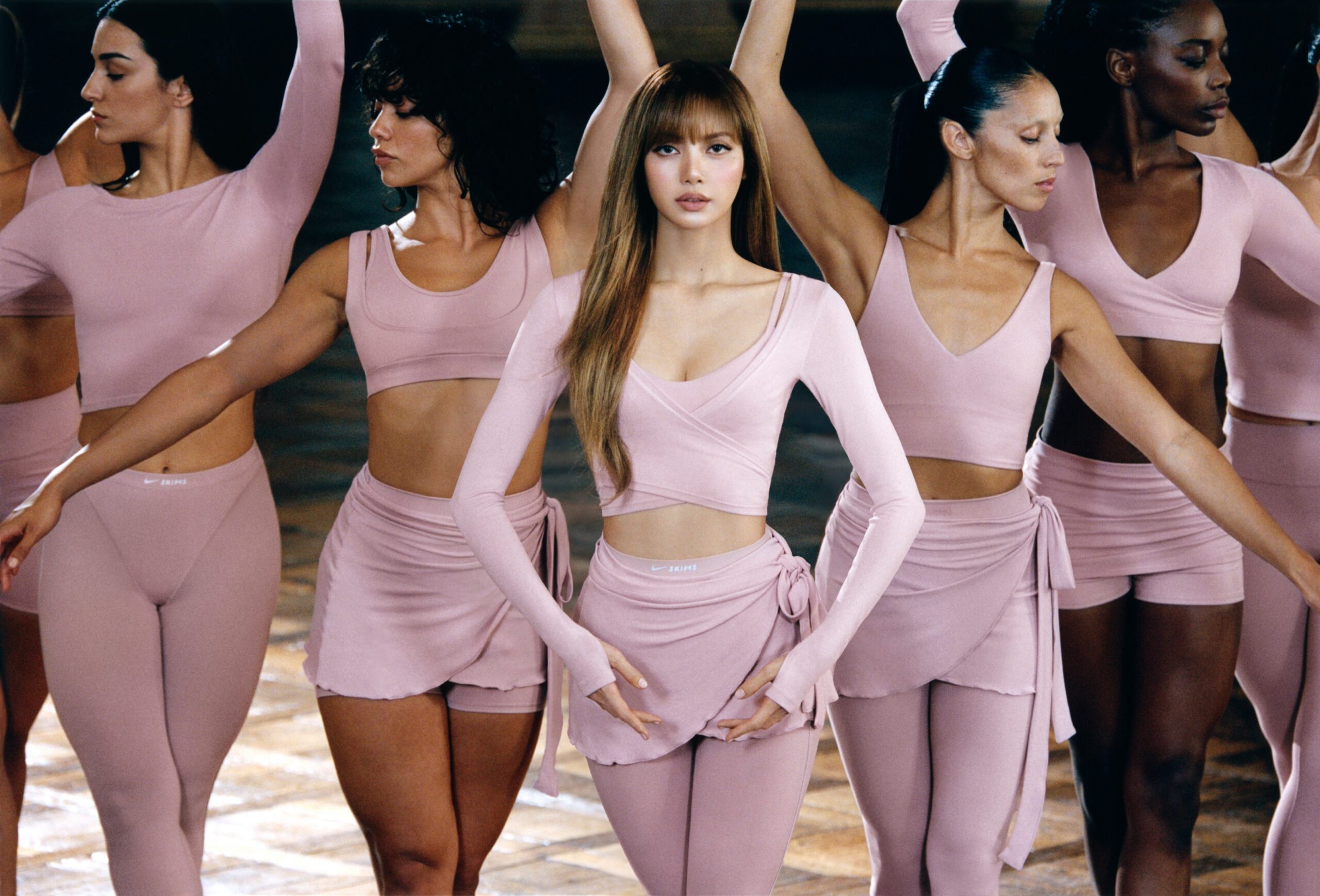
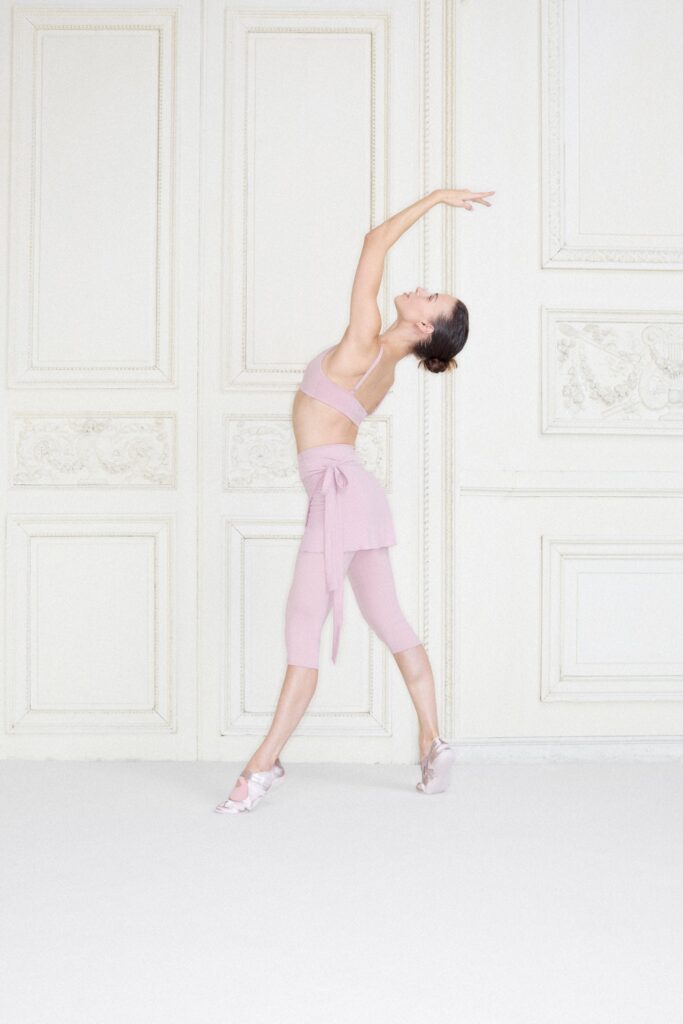
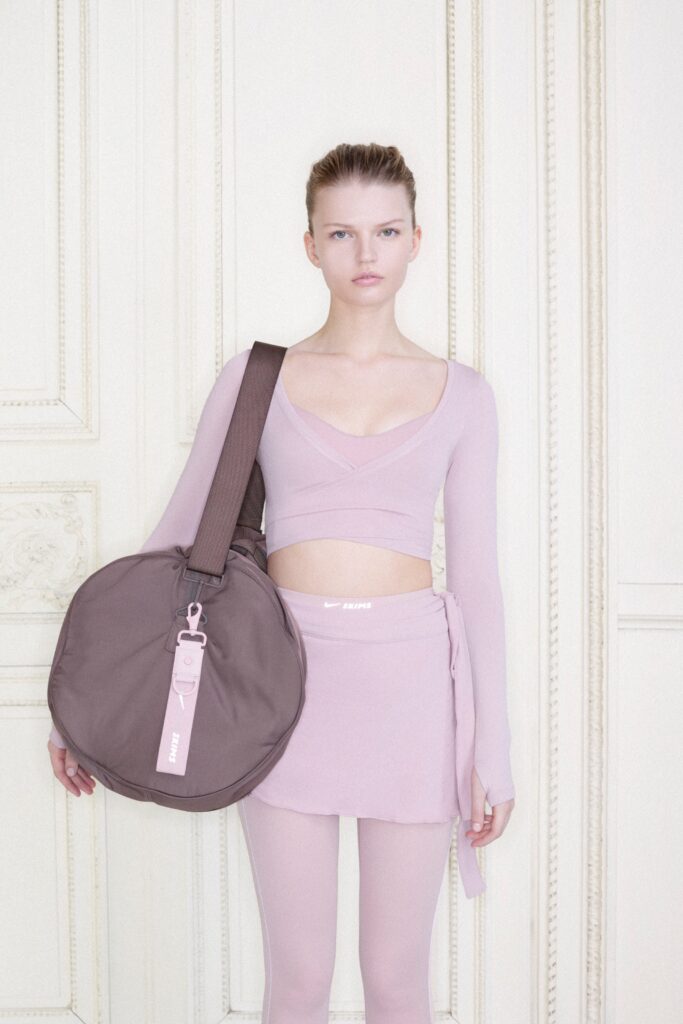
Balletcore has reached a fever pitch this spring, proving that interest in ballet is far from niche—regardless of what Timothée Chalamet might suggest. NikeSKIMS—a long-term brand partnership between Nike and shapewear company Skims—has emerged as a key player in the conversation. Its Spring ’26 Collection, released earlier this year, draws heavily on the aesthetic of classical dance, reimagined for both studio and street.
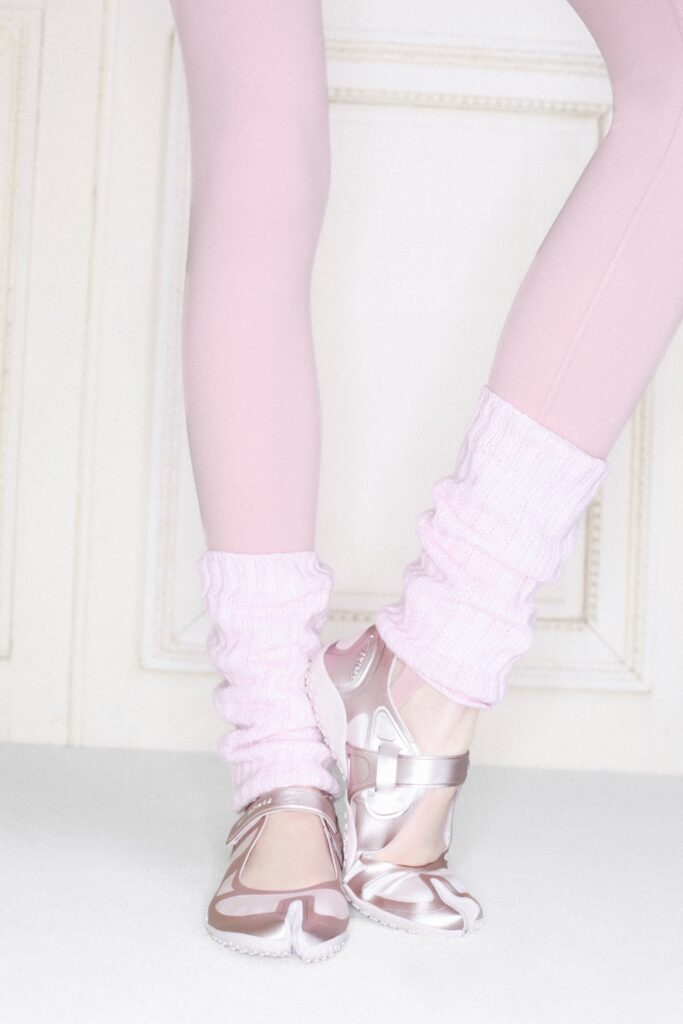
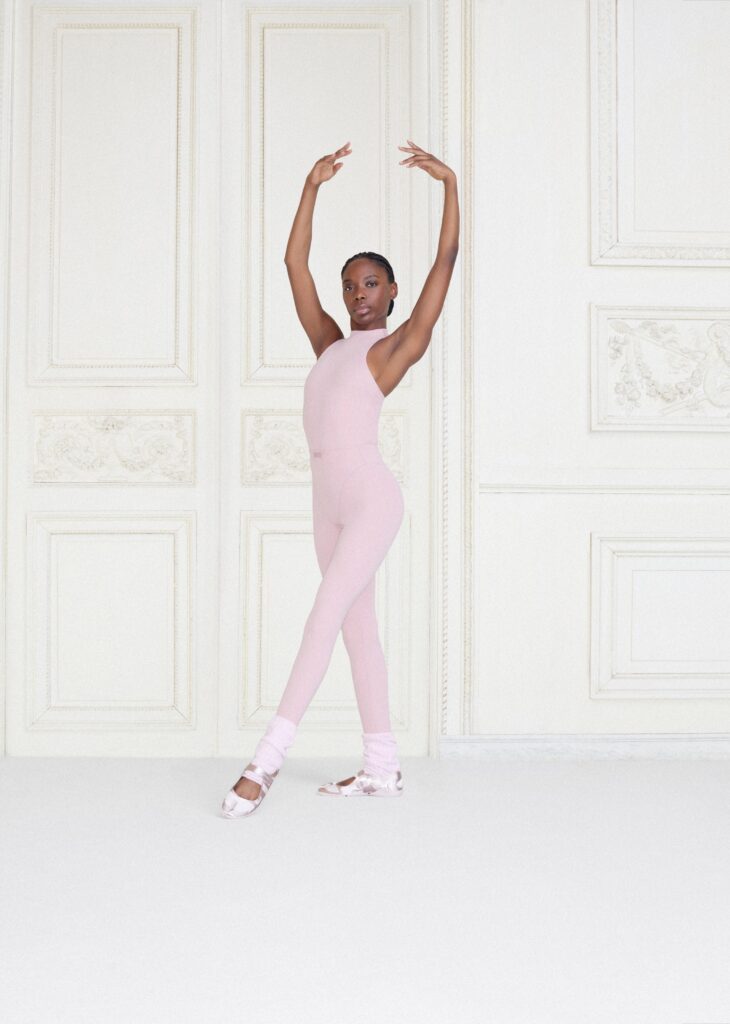
Described in a press release as “inspired by the modern ballerina,” the head-to-toe system of dress features apparel, accessories, and footwear, ranging from tight-fitting ballet-wrap–style tops (a defining trend this season) to wrap skirts in pastel pinks, browns, and blacks. Items are available to purchase on Nike’s and Skims’ respective websites and in stores.
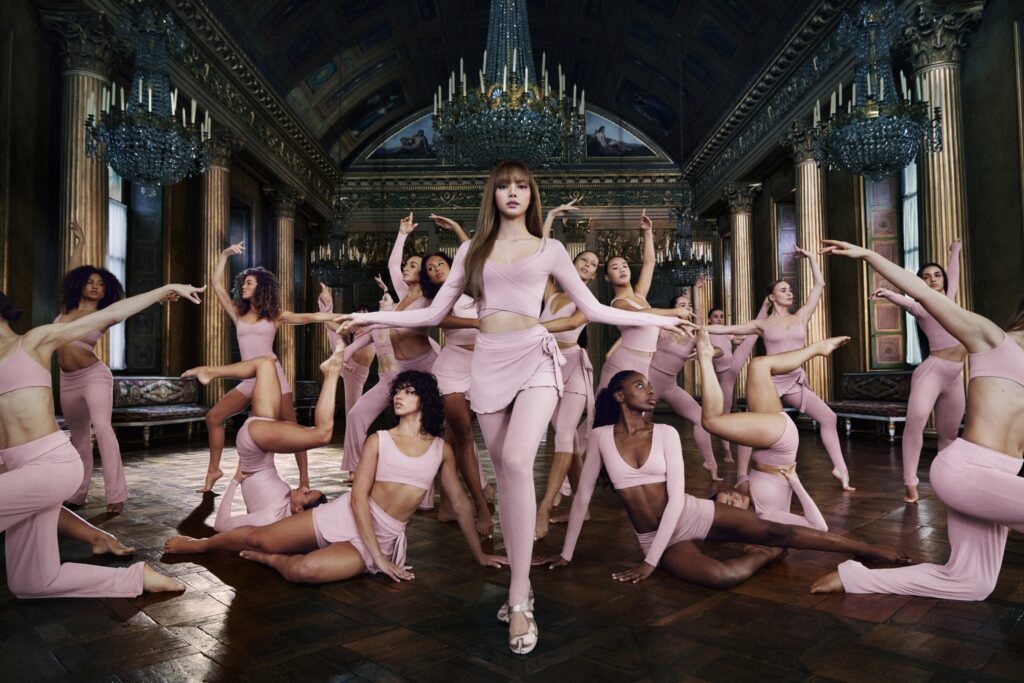
The collection launched alongside a video featuring Lisa of K-pop group BLACKPINK, performing a hybrid ballet-and-commercial-dance routine set to a reworked Mozart track, choreographed by Sergio Reis and Malou Linders. The film prompted mixed reactions when reposted by popular account @modelsdoingballet, which often criticizes brands for not hiring dancers to show off their ballet-inspired product lines. “Not a pointed toe in sight,” wrote one user about the video, while others were more celebratory. “The choreo is bomb [and] they hired real dancers,” wrote dancer and choreographer Bridget Nicole Scheiner.
Others took issue with NikeSKIMS clothes themselves. “I’m getting really sick of seeing the ballet aesthetic interpreted as the clothes pre-ballet students wear to class, reworked as ‘sexy,’ ” one commenter posted. “Why are they taking inspiration from what four-year-olds wear to class?” Producer, journalist, and athlete Pamela Price also called out the perceived lack of originality in the designs. “Capezio had this wrap in 1996,” she wrote.
Against this backdrop, DRN spoke to dancers, manufacturers, and retailers to assess how the collection is resonating across the industry.
From the Studio Floor
Canadian dancer (and “So You Think You Can Dance” All-Star) Alex Wong was among those to defend the campaign. “I feel like sometimes [the dance world] gatekeeps things,” he wrote to DRN. “I understand, since dance and ballet can be underrepresented, and people often undermine the hard work of dancers by thinking they can just hire anybody, leading to embarrassingly awful campaigns. But the more exposure something gets, the more people see it. That can lead to them falling in love with the art.”
Katie Malia and Suzanne Jolie, the creators behind @modelsdoingballet—both dancers themselves—take a more critical view. Malia questions why Nike chose to collaborate with Skims on a ballet-inspired collection and campaign rather than with an elite ballet dancer, granting the art form the same level of seriousness as other sports. After all, one of the brand’s defining moments came when it signed Michael Jordan to create the Air Jordan line.
“I wish Skims would’ve used their ballet ambassadors Madeline Woo and Luna Montana [in the campaign],” says Malia. “This is such a bigger discussion than ballet aesthetics. It’s about how a mass corporate conglomerate is clogging the niche consumer pipeline and valuing celebrity culture over elite athleticism in the ballet world. So what if Madd Woo isn’t a household name? Skims and Nike have the power to make her one.”
Neither Malia nor Jolie would wear any of the collection to dance in. “I don’t wear leggings to ballet class,” says Jolie. “When I’m in class or rehearsals, I’m in a leotard and tights with my favorite warm-ups. That’s how I feel and perform my best.” All her dancewear comes from specialized brands. “My closet is full of Imperfect Pointes, Yumiko, Suffolk, Nikolay, and M Stevens leotards. All my warm-ups are by RubiaWear, former Boston Ballet principal ballerina Ashley Ellis’ brand.”
Malia is more open to incorporating pieces from other brands, describing the crossover between sportswear and dance as “a beautiful union.” Wong—who notes the lack of options for men in NikeSKIMS’ collection—agrees: “For tights, dance belts, shoes, etc., it has to be dancewear brands, but then for other things it will be mainstream athletic brands.”
The Retail Perspective
Though some are doubtful dancers will be switching to NikeSKIMS for studio wear, Rhea Lwin, owner of On Pointe Dancewear in Bellevue, WA, cautions against dismissing the garments outright. “The fabrication story is compelling,” she wrote DRN via email, referencing the collection’s matte compression pieces with Dri-FIT, semi-sheer mesh layers, and stretch-knit components. “The quality appears consistent with Nike’s manufacturing capabilities, and the color story is very on-trend with a balletcore aesthetic.”
That said, Lwin would be interested in a deeper comparison between NikeSKIMS’ garments and those of traditional dancewear brands, particularly in terms of the construction details that matter most to dancers. She points to “seam placement that won’t irritate during extensions, gusset engineering, and how waistbands perform through repeated movement” as “serious questions dancers ask that most mainstream consumers don’t.”
Tan Li Min, founder of Singapore-based dancewear brand Cloud & Victory, highlights how as a dancewear-specific manufacturer, she keeps these considerations front of mind. “When I’m creating clothing, I’m always thinking about what would make people feel comfortable in a ballet studio,” she says. “I’m thinking about things like support and compression, how a piece elongates the body, and how to make it interesting without straying too far from the expectations and conventions of ballet.”
Complementary or Competition?
Is NikeSKIMS’ Spring ’26 Collection complementary to dance retail—or appropriative competition? “I don’t really view any dance brand as competition because everybody does something different,” says Tan. She also pushes back on the framing of balletcore as “cultural appropriation.” In a video posted to Cloud & Victory’s Instagram following the NikeSKIMS release, she told critics to “touch grass,” noting that ballet itself has a long history of appropriation, including “blackface, brownface, and yellowface.”
For Lwin, balletcore collections such as NikeSKIMS are “complementary, without question—but only if we’re strategic. A teenager who falls in love with the NikeSKIMS ballet drop, starts taking barre classes, and discovers she loves movement will eventually need real dancewear.”
Tan agrees that while dance retail should serve its core market of ballet dancers, it should be open and welcoming to those who show new interest in the art form. “Anything that expands ballet to a wider audience is good for the art—and, of course, good for those of us who make a living from it,” she says, “because making a living from it is hard.”
And when those new customers come knocking, dance retail stores can offer a specialized environment, with “staff who dance and who have trained—people who can look at a customer and say ‘That’s not sitting right,’ or ‘Try this brand instead; their torso runs longer,’ ” says Lwin. “No amount of Dri-FIT technology replaces that conversation.”
The only risk is if specialty retailers become complacent and stop articulating what makes technical dancewear worth the investment. (Lwin notes that NikeSKIMS’ price points of $30 to $150 make the collection accessible without feeling like fast fashion.) “The conversation NikeSKIMS starts is one we should be eager to continue in our stores.”
Emily May is the editor of Dance Retailer News.