
By 1958, dance teacher Kathleen Hamilton had amassed a collection of her dance studio’s old costumes in her basement. After transferring them to a warehouse, she began renting them out to other schools in the Ontario area, laying the groundwork for what would become Hamilton’s Theatrical.
Decades later, Hamilton’s has grown from a costume rental company into a costume manufacturer in its own right—and a unique one at that. Owned and operated by Hamilton’s daughter, Tonya, out of Ontario for the past 30 years, it has carved a unique path in the industry, connecting dance retailers with studio owners. In doing so, it provides storeowners with a critical new revenue stream in a world driven by online retail.
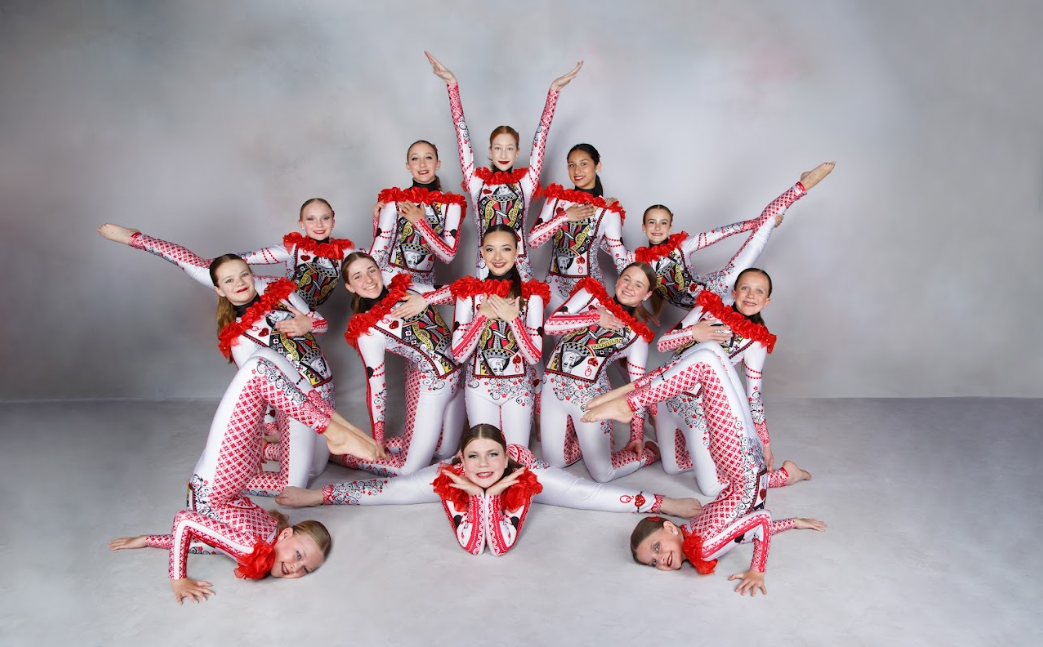
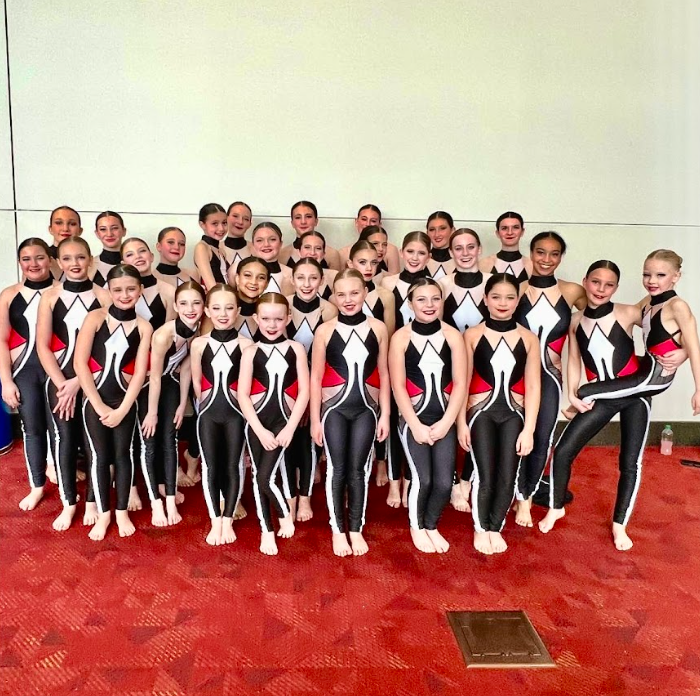
Unlike most costume manufacturers, Hamilton’s offers a made-to-order model with custom fits and designs that the client can create using a silhouette and fabric catalog. “Fit for costumes is very, very important,” says Tonya. “It’s as important as it is with pointe shoes.”

To make such service possible, Hamilton’s works with partner dance retailers, providing them with sizing materials and fabric swatches to help customers make informed selections from the catalog. The retailers then measure dancers in-store and collaborate with teachers, choreographers, or parents to create the ideal design before sending the specifications off to Hamilton’s for production.
This model encourages studio owners to work directly with retailers when it comes to costumes, rather than placing online orders that don’t guarantee a perfect fit—physically or thematically. “The retailer model is a wonderful marriage because they understand how important fit is,” says Tonya. “That’s a mainstay for them.”
Below, Tonya shares more about the company and her vision of cooperation within the industry.
How does Hamilton’s production work?
We sell all over the world. But the thing I am most proud about with Hamilton’s is that we manufacture domestically. It’s hard, but I think it’s the coolest thing we do. We manufacture everything in North America and ship in about 10 to 15 days.
We also have over 4,000 SKUs [stock-keeping units] and make costumes in size 3 child to 3X adult—if a dance teacher finds a hoodie at the Gap that they love for a big hip-hop number, chances are they don’t have that SKU available in a full-size range. We do. So between stocking so many SKUs in 20 different colors, we would have needed the biggest warehouse ever. That’s why we have the made-to-order model.
How do you customize the costumes?
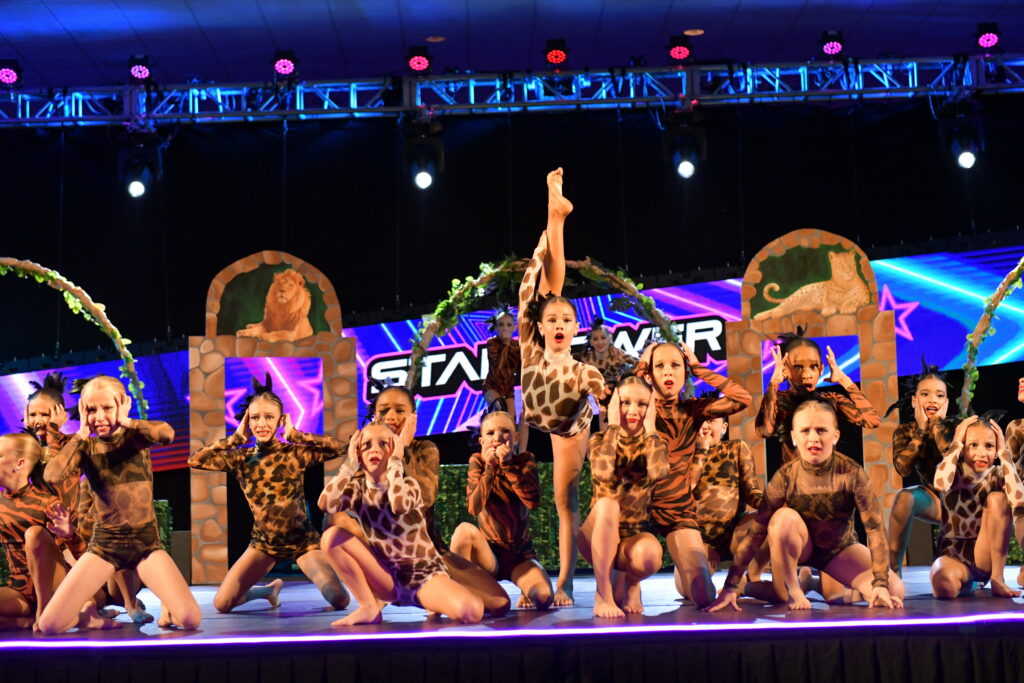
“Custom” means two things: custom fit and custom vision. Inclusivity in dance is so important—what happens if you’ve got super-long legs and a long girth, or if you need a little extra room? Those people are really stuck because they can’t get a custom pattern at a catalog house. But with Hamilton’s, everything is made specifically for that dancer so they can have the most flattering fit and color.
Let’s say a choreographer is doing an arachnophobia number, and they want their dancers to be spiders. In another manufacturer’s catalog, they may only find an itsy-bitsy spider, but want a tarantula. At Hamilton’s, we can customize costumes to fit their vision for the piece. And you won’t see that costume anywhere else. At conventions, where standing out is everything, that is a huge perk.
Hamilton’s is like Build-a-Bear, or a Home Depot design center—I like this leotard with this color, this skirt length, etc. Because we’re component-based, the customer can really get the look they want. We can even manage the price point to fit their budget. The parent, dancer, or teacher books their appointment with the retailer, and they design the costume there on an iPad.
How do you partner with dance retailers?
I used to own a 10,000-square-foot retail store, so I know how hard it is for retailers and how super-busy they are in August through October. But what are they doing to generate traffic in the quieter months of January, February, and March? This is a solution.
There’s no membership. Retailers sign up with us to access our color charts, swatch cards, and sizing kits. (We just ask that they purchase samples to display in-store. They also buy the sizing kit, but the rest of our tools are complimentary.) They go through an onboarding process with us, then there’s continual education through Tea with Tonya, which is when our retailer community comes together [virtually] on Tuesdays to discuss our ideas, successes, and takeaways. Store owners can feel so siloed, so this is a wonderful opportunity to foster community.
Retailers are burdened with inventory—they have hundreds of thousands of dollars of it sitting on their shelves. This is a way [for them] to increase revenue without taking on that burden. (And to connect them with their ideal client pool!)
Have you faced any challenges introducing Hamilton’s to different schools or retailers?
Retailers immediately ask about the margin they’ll make on the costumes. They’ll make a full keystone [on a solo costume]—buy one for $80, and you’ll sell it for $160. They get excited because the average order is high, and they ask if they can sell to dance studios. They can, but the margin is highest selling to the solo, duet, and trio market, not the large baby-ballet groups. [Hamilton’s offers solo, duet, and trio pricing and volume pricing on units of four or more, so the consumer saves more with higher-volume orders.] The retailer would make somewhere between a 10 [and] 20 percent margin on those baby costumes, which does not cover their expenses. It could make a great add-on and get your foot in the door, but the full keystone exists for the competitive dancer. Just know that you won’t be costuming the whole studio.
The other thing is that retailers are not early adopters. When storeowners think of “costumes,” they think of them as something that goes directly to the studio. They’ve got to do a mindset shift. The industry is changing, and this is a way to gain a totally different market share they’ve never had before. It’s a win-win for everyone!
Kyra Laubacher is Dance Spirit’s editor in chief and Pointe’s news editor.