
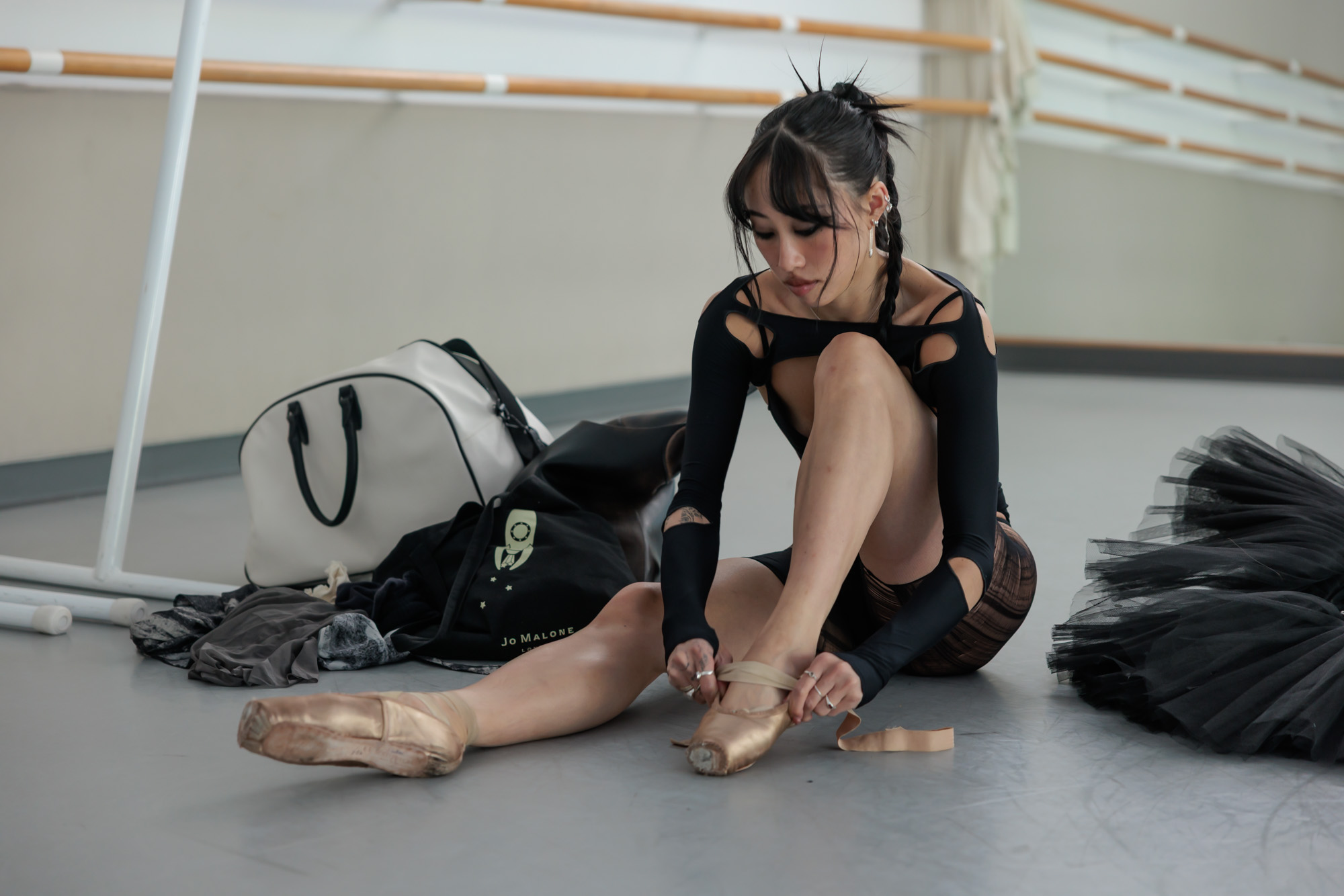
Dance Magazine’s May/June cover star Madeline Woo is more than a powerhouse performer—she’s a business-minded entrepreneur. Whether by leveraging social media to grow a global following, challenging ballet’s traditional aesthetic standards, or launching her own fashion label after a career-threatening injury, Woo has built a brand rooted in individuality, resilience, and authenticity. Retailers can learn a lot from her story about personal branding, risk-taking, and authenticity-driven product development—as well as the role dancewear plays in helping dancers feel confident and empowered in the studio and onstage. Read a condensed version of Dance Magazine’s profile below. — Emily May, Editor, Dance Retailer News
You probably first saw Madeline Woo on social media. She popped to the forefront of the digital dance consciousness in the early 2020s, when clips of her in class at Royal Swedish Ballet went viral. Woo’s buoyancy in grand allégro immediately captured the dance world’s attention, her jumps so easy and self-assured that they read as sunny optimism. Even in the early days of her career, she found a global audience online. Now a principal with San Francisco Ballet, Woo is a forward-looking force in ballet: a celebrated principal who prioritizes being relatable, an exacting technician with a focus on individuality, and a multidimensional artist whose influence extends far beyond the stage.
Social Media Stardom
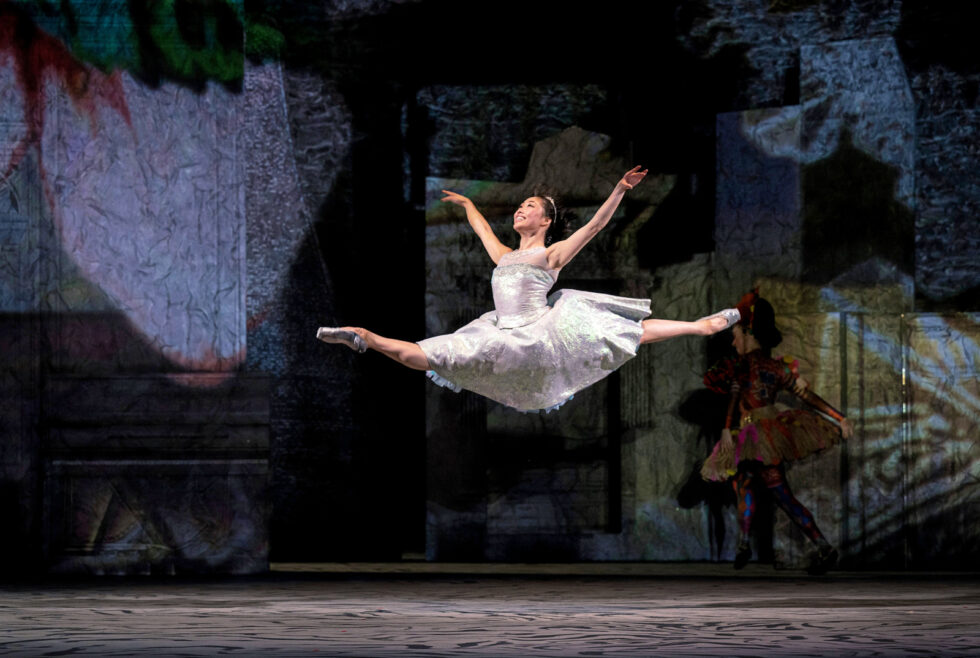
Woo initially started experimenting with social media during her first contract with Royal Swedish Ballet. “I initially started posting just for fun,” she says. That changed over time, as Woo’s clips began to go viral on Instagram Reels. “I honed it down to videos that did better than others, usually dancing in class videos,” she says. The dance world took note, and she received offers for galas and performances around the world.
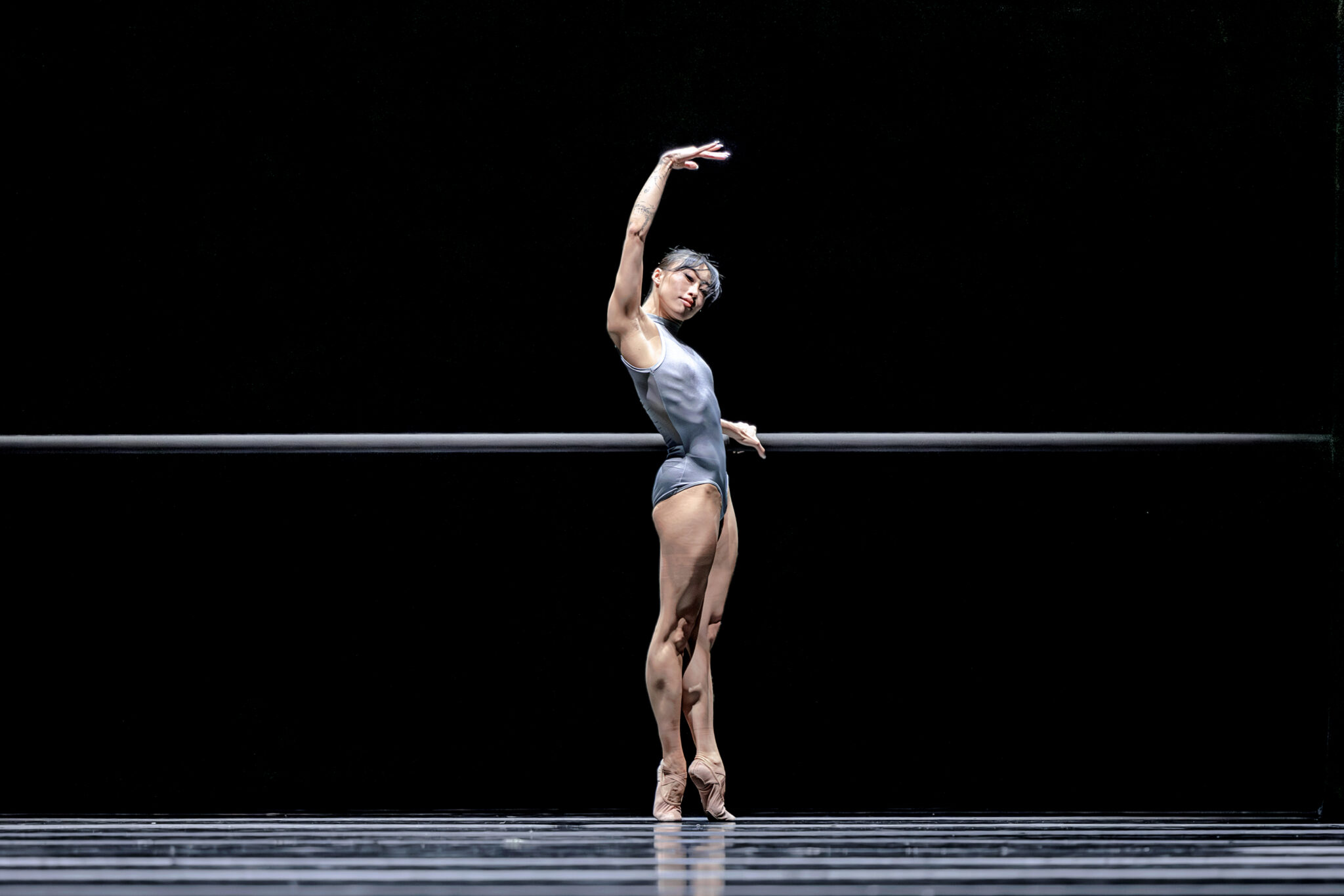
Woo also became a beacon on social media for her relatability outside of the studio, sharing stories of her close friendships, her cats—and, notably, her tattoos. When in 2024 she felt she was in a rut, she went to artist Georgios Kazakis, who created a tattoo sleeve. “Basically, it was to look powerful,” she says. While it wasn’t her first tattoo (that was a California poppy), it was the first that would be visible onstage. “I was like, ‘I didn’t ask anyone at work if I could do this, and I might get fired,’ ” she says.
Woo wore long sleeves for the next month in the studio. “Eventually, I revealed it,” she says, “and of course, people commented whatever they needed to comment, whether it was positive or negative. And then, no one cared anymore.” It was a confirmation to Woo that she could prioritize her individuality within the framework of professional ballet. “You can still do your job and look classical,” she says—noting that, when the role requires it, she covers her tattoos with makeup.
Creating MADDWOO
At the end of 2024, a tear of the rectus femoris tendon in Woo’s hip kept her out of the studio for several months, prompting a broader reckoning of a future beyond ballet. “Our careers as dancers are so contingent on us being healthy,” says Woo. “Suddenly, I wasn’t getting better after a couple of days of rest and ibuprofen.”
She brainstormed with her boyfriend, Ethan Watts, then a dancer with RSB (he has since retired and moved with Woo to San Francisco, where he grew up). Together, they evaluated her offstage strengths—her massive social media reach, experience promoting brands, and her distinctive SoCal surf-skate–meets–Scandi-minimalist style—and hatched an idea: a fashion line, starting with a capsule collection. “I am really in love with fashion, whether in the studio or on the street,” says Woo. “We were like, ‘Why don’t we make a line combining that?’ I started to design and sketch, and I ended up coming up with the first line, which is a leotard, some sleeves, and a pair of oversized jeans.” MADDWOO launched in December 2025 and is set to be part of Stockholm Fashion Week in June 2026.
Woo’s inspiration for the line sprang also from personal experience. After years in the unforgiving leotard and tights of a ballet-school uniform, she had found the freedom, as a professional, to dress as she pleased for class and rehearsal a revelation. It made her realize how much her style influenced her mindset. “It’s been my journey to finding my confidence in my body,” she says. “We’re forced to wear these uniforms in school, and to look a certain way, even though going through puberty, that’s really hard. Joining a company where I could wear what I wanted was huge. I started liking how my body looked in the mirror. It affects how you move, how you act, everything. I wanted to share that experience, not just with dancers but the general public as well.”
Caitlin Sims is the editor in chief of Dance Magazine and content director at Dance Media, which publishes the title.
The full version of this article was published in Dance Magazine in May 2026. You can read it here.