

Balletcore is the newest “it” fashion for mainstream sneakers.
You know it’s a solid trend when fashion-forward pop star Harry Styles dons a pair of “sneakerinas,” and Bad Bunny’s recent adidas collaboration resulted in a shoe called the Ballerina. Athletic brands like Nike and Puma have joined in with ballet-inspired designs too, as have couture labels like Prada and Miu Miu. “It is cool how Louis Vuitton’s sneakerina combines a ballet flat with the stability of a sneaker,” says 16-year-old Elizabeth Weber, a dance student at The Talent Factory in North Kingstown, RI. “They look lightweight, and I believe they would be effective for walking around the studio with some extra style.”
This fashion trend is likely to be around for a while: Searches for “ballet sneakers” increased 1,300 percent during the first quarter of this year on Lyst, a fashion shopping platform that provides quarterly reports fueled by global fashion intelligence. That being said, these designs merely pay homage to ballet. According to Dr. Nancy K. Imbeau, co-founder, president, and chief medical officer at ProMotion Rehab and Sports Medicine in South Carolina and a member of the American Physical Therapy Association’s Orthopedic and Private Practice Section, they generally lack the support and functionality that dancers, studio owners, or dance teachers need for classes, rehearsals, or performances.
“It would be unwise to assume these shoes will provide enough stability around the ankle joint or midfoot for higher-level dance skills and choreography, especially if dancers have suffered from prior injuries at the ankle or foot,” she says. “There’s always an inherent risk of injury, regardless of shoewear, with any physical activity, but a traditional dance sneaker would provide better stability over a fashionable ‘ballet sneaker’ if choreography calls for that type of look.”
Pamela Levy, the director of the ABT/NYU master’s degree program in ballet pedagogy, looked at a few of the streetwear styles and quickly determined she would not be buying any of them to use in the studio. “I think the people who understand dance and dancers’ needs are the experts who should be creating footwear for us,” she says, mentioning dance brands like Bloch and Capezio. “However, if these shoes are helping people feel more connected to ballet by appreciating its aesthetic, I think that’s a good thing.”

When Levy teaches, she wears Bloch’s adult Boost mesh split-sole dance sneaker. The $97 lightweight lace-up shoe provides built-in arch support, non-marking soles, and a spin spot for easier turns. It also has an air cushion of 4PSI for shock absorption. Levy started wearing dance sneakers about a decade ago, and has worn various brands over the years. “I was teaching many, many hours in ballet slippers and my feet were hurting,” she says. “I needed the extra support and padding.”
Similar studio-friendly options include Fuego’s Split-Sole dance sneakers, which come in six colors, are vegan, weigh 6 ounces, and feature a patented outsole that provides studio-to-street durability. The $150 shoes also have a shock-absorbing cushioned insole and pivot points to assist with turns. And Só Dança’s Sonnet sneaker ($90) has a split sole, mesh and suede upper, a removable insole so personal orthotics can be used, and a flat tip for toe stands.
When you wear a different type of footwear from students, it sets you apart as a teacher, Levy notes. “And, if I’m wearing ballet slippers, I find myself trying to dance full-out. That’s dangerous if you’re not warmed up properly,” she adds. “With my dance sneakers, I can demonstrate nicely and clearly, and it helps save my body a little more, too.”
And though you may not decide to carry an inventory of sneakerinas anytime soon, it’s still important to know what’s trending. Perhaps they might inspire someone to sign up for dance classes, or help develop new arts supporters? Here are three of the newest ballet-inspired nondance sneakers to have on your radar:
adidas
Bad Bunny Ballerina
$120

Bad Bunny, born Benito Antonio Martínez Ocasio, is a multiplatinum recording artist and three-time Grammy winner who partnered with adidas on the Bad Bunny Ballerina shoe. Launched in March at select retailers, this model is meant to be a nod toward Puerto Rican dance culture and music. The design inspiration pulls from the adidas Taekwondo shoe, which was originally crafted for martial artists in the 1980s and then expanded into the lifestyle space in the early 2000s. Coming in classic gold as well as off-white and black, the Bad Bunny Ballerina features suede overlays on the toe and heel, as well as bungee-cord laces.
Nike
Air Rift
$105
First developed in 1996, Nike’s Air Rift was hard to miss: The big toe was isolated from the others, and the shoe had an open midfoot. This year, it’s receiving the “Black Swan treatment,” as nylon ribbons are being added to the adjustable straps, much like the pink version that was released last fall (see video above.)
The split-toe design was inspired by Kenyan barefoot runners and is intended to help with balance and foot flexibility. It has a neoprene-like upper that adapts to the wearer’s foot shape with time, and the Nike Air technology in the heel is combined with a plush foam midsole and rubber detail. The tread also provides durability and traction.
This all-black shoe doesn’t have a firm release date yet, but according to Footwear News, it’s expected to be available this summer through the company’s website and select third-party retailers.
Repetto
Tennis Silk
$400
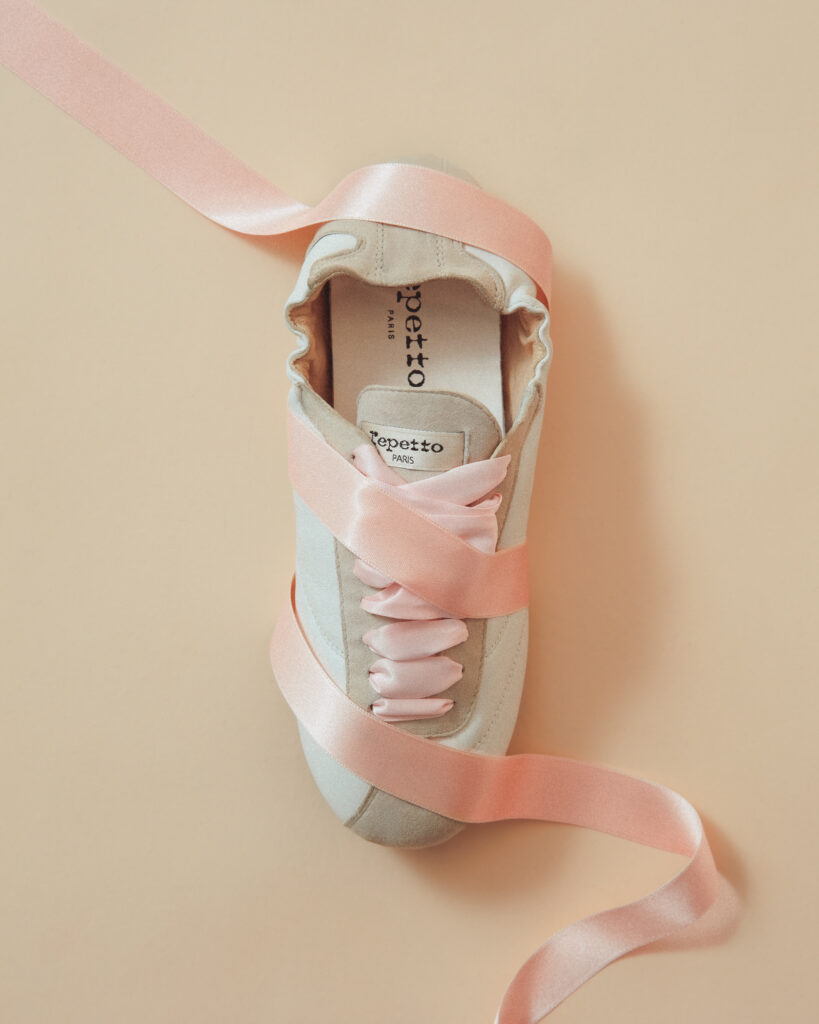
Repetto is a French brand known for its dancewear, artisanal activewear, and leather streetwear shoes. The company created its first ballet shoes over 75 years ago, and in 1956—on Brigitte Bardot’s request—designer Rose Repetto created the brand’s now iconic ballerina flat.
Repetto’s newest streetwear sneaker, Tennis Silk, was inspired by the “delicate aesthetic of ballerinas.” A cross between a city sneaker and a ballet flat, the design was unveiled in February in black and in white with pink laces. Silver was recently added as a third option. The shoes are made from calfskin, with a cowhide leather insole, a lambskin lining, and a rubber sole. The double satin laces are meant to recall the ribbons of ballet slippers, and its gathered collar is directly inspired by the folds of a tutu, according to a press release from the company.
While Repetto is deeply experienced in developing dancewear, and the brand describes the Tennis Silk as “designed for life and dance”, it’s listed alongside the brand’s other streetwear shoes on their website. In contrast, Repetto’s dance-specific category features purely functional footwear, like ballet slippers, pointe shoes, and jazz shoes.
Hannah Maria Hayes has an MA in dance education from New York University and has been writing for Dance Media publications since 2008.