

South Florida–born and New York City–based pointe shoe fitter Casey Noble trained in dance at Marymount Manhattan College. Yet it was after dropping out of school that he discovered his passion for dance retail, cutting his teeth working with Bloch and Capezio while dancing professionally for Chevalier Ballet. After some time away from the stores, he realized he missed the hands-on work in the industry. And so, two years ago, he decided to start his own venture, foundeding Misfitters in 2023.
Described as “the shoe room for freelancers,” Misfitters is a pointe shoe consultancy that helps dancers with specific needs—whether due to injury, anatomy, or gender identity—who often fall through the cracks of traditional retail fitting. They also cater to small companies that don’t have access to a traditional shoe room.
“I’m like a stylist for your pointe shoes,” Noble says playfully on a call from Manhattan, describing how he acts as a liaison between dancers and vendors, offering a level of ongoing, personalized care most retail settings can’t provide.
Below, Noble shares more about Misfitters’ origins, the importance of fitting the whole dancer, and how to foster a sense of inclusion and individualized care in the fitting room.
What inspired you to create Misfitters?
I first went on pointe when I was around 15 years old after a long battle with the director of my studio. I’m a six-foot-four guy, just over seven feet tall on pointe, and not the most naturally gifted dancer. But I felt it was the mark of a true artist, and I identified with the girls in my class more than I ever did with the boys.
After working for Capezio in New York, I noticed that typical fittings weren’t working for all my freelancer friends—including male dancers on pointe. Misfitters was born to fill that gap in the market.
What wasn’t working for them?
A lot of little details were being overlooked for the sake of product value or aesthetics, which can completely derail the dancer’s safety and competence. My approach is function first, aesthetics later.
When you’re fitting, you have to look at the whole dancer, to consider their technique and strength, or whether their feet have two different shapes, for example. If I can narrow a dancer down to a specific set of needs based on injury, technique, height, strength, hypermobility, and also gender expression (sometimes things like being on hormone therapy can affect flexibility) then I can select a number of shoe models that accommodate those features. Then we can decide which is the most aesthetically pleasing. There has to be a healthy balance.
What does the process look like for a dancer who comes to Misfitters?
We do a 15-minute phone call to discuss what a new client needs and what I can offer. If that goes well, we’ll do a consultation—a little bit of class either on the phone or in person—where I’ll gauge the strength of their feet, the alignment of their body, and their flexibility. Then we take a look at their current shoes and why they are or aren’t working.
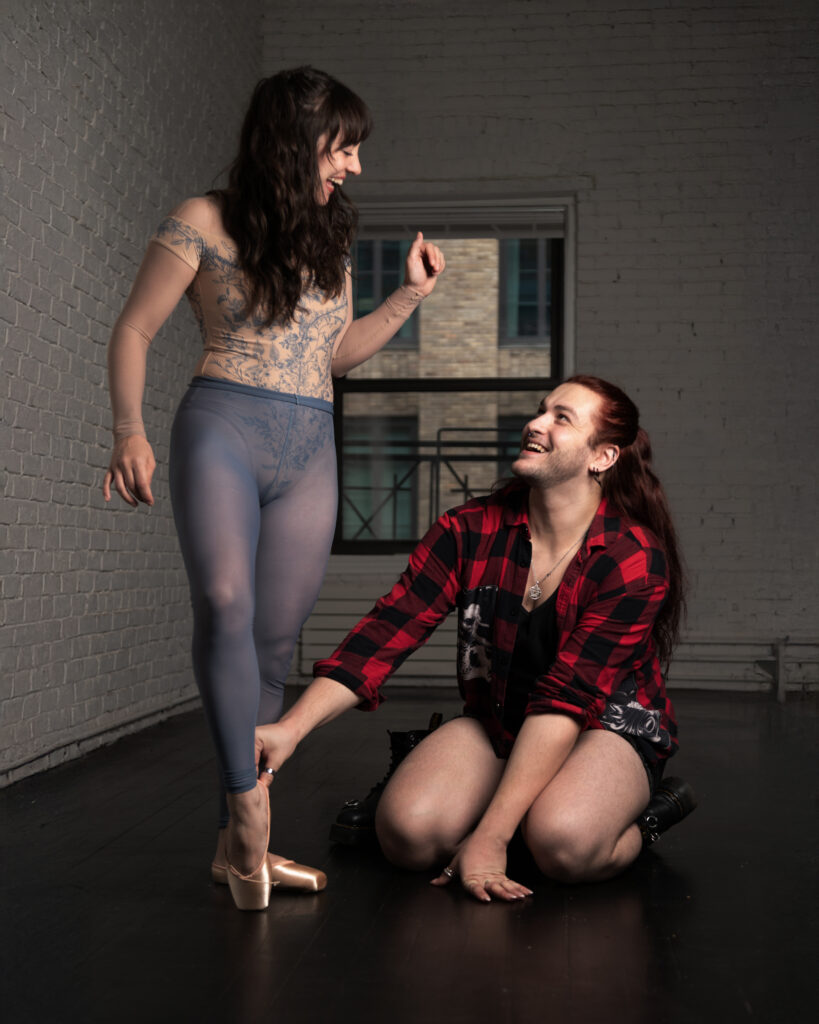
Once that’s done, I schedule a fitting with a store in Manhattan, whichever I believe has the best options. There, we’ll conduct the fitting and have an open conversation about how to prep and break in the shoes. Then I’ll monitor how the dancer progresses. Generally, we speak after the first day they wear them, and again in about two weeks.
Why is checking in after the fitting so important?
It’s about being extremely present with the dancer and keeping an open conversation about what’s going on. Since most dancers wear shoes that don’t fit well, many need transitional shoes to help their feet relearn how to work properly. One of my first clients had hypermobile ankles*, but was wearing a very tapered, stiff Russian-style shoe that made her contract an injury. I put her into something boxy, soft, and academic. We knew she wouldn’t necessarily end up in it, but it was a way of training her out of an injury, letting her body settle into being on pointe again, and using her hypermobility.
[*Before dancing on pointe with any injury or special needs, dancers should check with a podiatrist, teacher, or health-care professional.]
What tips would you give for fitting male dancers?
Ask all the same questions as you do with female-identifying dancers. And don’t put a guy in a “brick” just because he’s strong. When I was in ballet school, I met some of the most beautiful, willowy, slender male dancers with insane lines and flexibility. There’s just so much diversity in gender expression and body types.
How can retailers with limited time with each customer foster a sense of individualized care in shoe fittings?
Make sure that the conversation is happening between you and the dancer. I don’t personally believe that a teacher or parent should have final say in the shoes. It’s all about building an actual relationship with a dancer, not just a transactional one. If they trust you, they will be more likely to speak up when there is an issue. They’re also going to feel a lot more comfortable coming back and trying what you think would work for them.
What are your hopes for the future of Misfitters?
I’d love to have a small team of people to travel the country, conduct fittings, and establish shoe rooms for small companies. I’d also like to consult with brands to help them fill the gaps in their market. I already do that a bit with Bloch, my alma mater.
The whole point of this is to make things accessible to the people who really need it, and to keep legacies alive. The pointe shoe brands we work with all have strong family-owned heritages. Representing the dancers, and the vendors who make all of their dreams a reality, is very, very important.
Emily May is the editor of Dance Retailer News.