
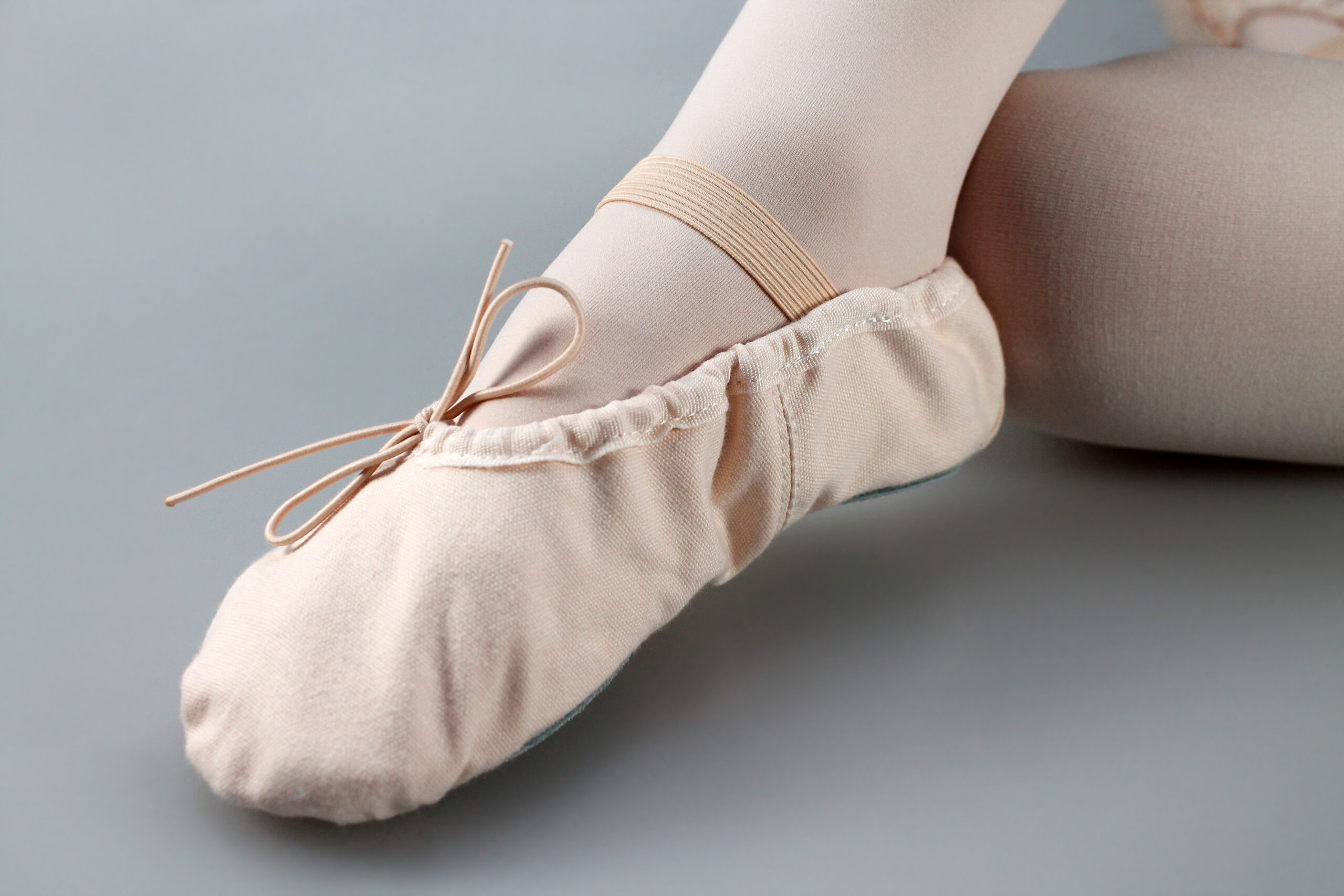
Melissa Mahady-Wilton, the recently retired executive and co-artistic director of The Conservatory in Kingston, Ontario, told me that over the course of the past season, she had been fitting dancers, including herself, in stretch canvas slippers several sizes larger than recommended. According to her, doing so allowed the dancers’ feet to perform in an anatomically safe, fully functional alignment. In the case of one dancer, the knee pain they had mentioned at the beginning of their fitting disappeared instantly. In the recommended size, a plié caused pain; in the larger size, it was gone. While I didn’t believe it at first, I was intrigued and had to find out more.
Mahady-Wilton is one of the most knowledgeable teachers I know, with a deep understanding of both the body and dance. When I asked her about her new approach to fitting, she explained that recommended sizes force the dancer’s toes out of alignment, meaning the entire anatomical chain of the foot, ankle, and leg up to the hip cannot fire or engage properly. This causes other muscles to compensate and can trigger knee pain, as well as “an entire host of [other] issues [such as] limited demi-pointe range, plantar fasciitis, and bunion pain.” By contrast, when barefoot, or in bigger sizes, these issues usually do not exist. “Adequate toe-box space is a key issue in all modern shoe design right now,” Mahady-Wilton says. “Research has shown that toe strength is one of the strongest predictors of falls or successful aging.”
This got me wondering: Have we retailers been fitting shoes too tight? When I started my first store in Halifax, Nova Scotia, in 1987, you had to do this, otherwise the leather would stretch out and look baggy. But materials—and our knowledge of dancers’ body mechanics—have changed. Is it time to reexamine how we’re fitting our dancers for their soft ballet slippers?
Why Soft Shoe Fit Matters
To see if Mahady-Wilton’s student was an isolated case, I turned to the scientific literature. Two studies offered clues to what might be happening. In the first, an evaluation of big-toe function in maintaining static and dynamic balance, researchers at Taiwan’s Chang Gung Hospital immobilized subjects’ big toes and found that their one-legged stability decreased. It also worsened their control when they shifted their weight forward and backward. In another study, by a doctoral student at the University of Queensland, they blocked nerves to stop the intrinsic foot muscles from activating. When the subjects hopped, the hips were more activated than without the nerve blocks.
Dance demands far more of the body than shifting weight or hopping, so I reached out to Australia-based dance physiotherapist Lisa Howell for more artform-specific insight. Howell, author of The Perfect Pointe Book and creator of The Ballet Blog, is internationally recognized for transforming how dancers understand the mechanics of their bodies.
Howell explained to me that in dance, the foot is central to the successful performance of the whole body. According to her, if the foot can’t spread and lengthen in a fondu, for example, the stability of the ankles and hip is challenged. The dancer may notice a loss of range in plié, and the hips will easily become overworked from compensating for the lack of stability in the ankles.
In the case of skintight shoes that shift the toe out of alignment, the foot can’t push off from the floor properly, and the calves have to take over. This has a negative impact on the dancer’s pointe and plié range.
Howell sees the consequences of too-tight shoes in her practice. Clicky, overworked hips and perceived “short Achilles tendons” are common problems that can be influenced by mid-foot restrictions.
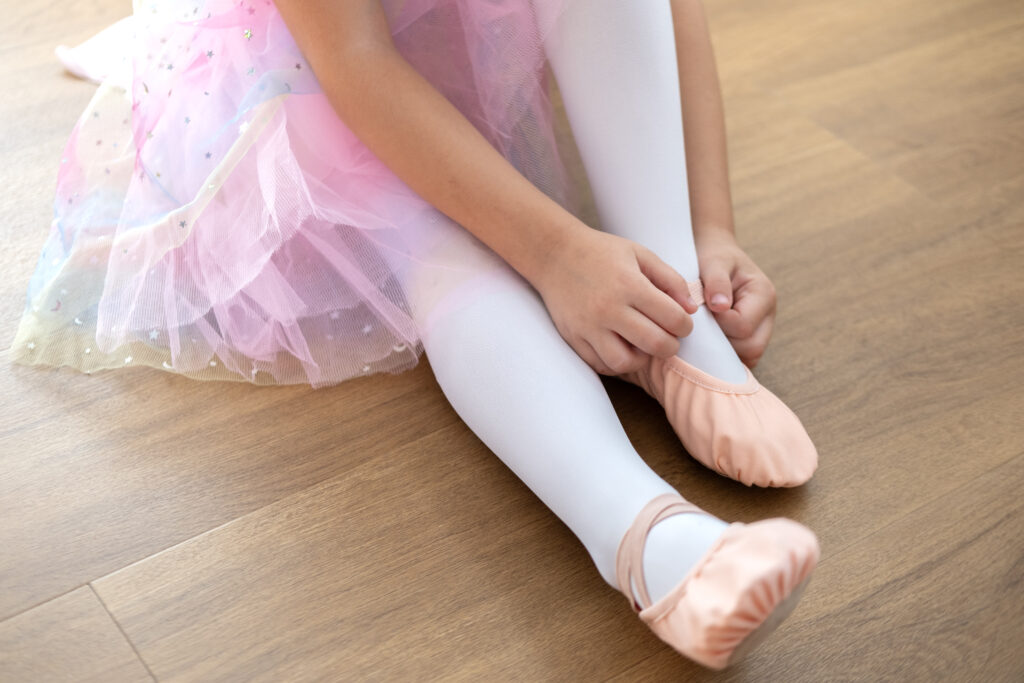
A not-too-tight fit is especially important for children under 10. Young dancers’ feet are very compressible, and it’s easy to fit them too tightly. When this happens, they can’t spread their toes and they have trouble balancing. More importantly, they lose proprioception. A young dancer is learning to sense their body’s position in space—they can’t do that well if their foot can’t fully spread.
A Simple Test for Stability
Howell gave a dramatic demonstration of why it’s so important not to restrict the foot when I spoke to her on Zoom. Lightly taping one foot of a dancer while leaving the other un-taped, she had her guinea pig balance on each foot. While the dancer was stable on the un-taped foot, the taped one showed the tendons around the ankle working overtime to maintain balance. The lesson was clear: The skintight fit, long standard in ballet and jazz shoes, may actually be doing our dancers a disservice.
While shifting dancers away from the “tight is right” mindset will be a challenge for retailers, Howell suggest a simple test to demonstrate the benefits of a looser fit. Have them balance on one foot, barefoot, in both parallel and turnout, to observe their natural stability, then in their preferred shoe size, and finally in a slightly larger one. They’ll feel the difference, how much more stable they are, and how much better they can move in the slightly larger shoe.
Some dancers may still prefer the look of a tighter shoe over the functionality of a looser fit. For those dancers, Howell recommends they buy a looser shoe for training and a tighter fit for performance. Inevitably, Howell finds that the dancer eventually drops the performance shoe and uses the looser shoe in both contexts.
Rethinking Dance Aesthetics
While dance is often obsessed with aesthetics, we should focus on the right kind. Isn’t a little extra fabric at the end of a shoe less important than the beautiful movement of the foot? A foot that, as Mahady-Wilton says, should be free to perform at its full capacity in a shoe that facilitates, rather than restricts, movement.
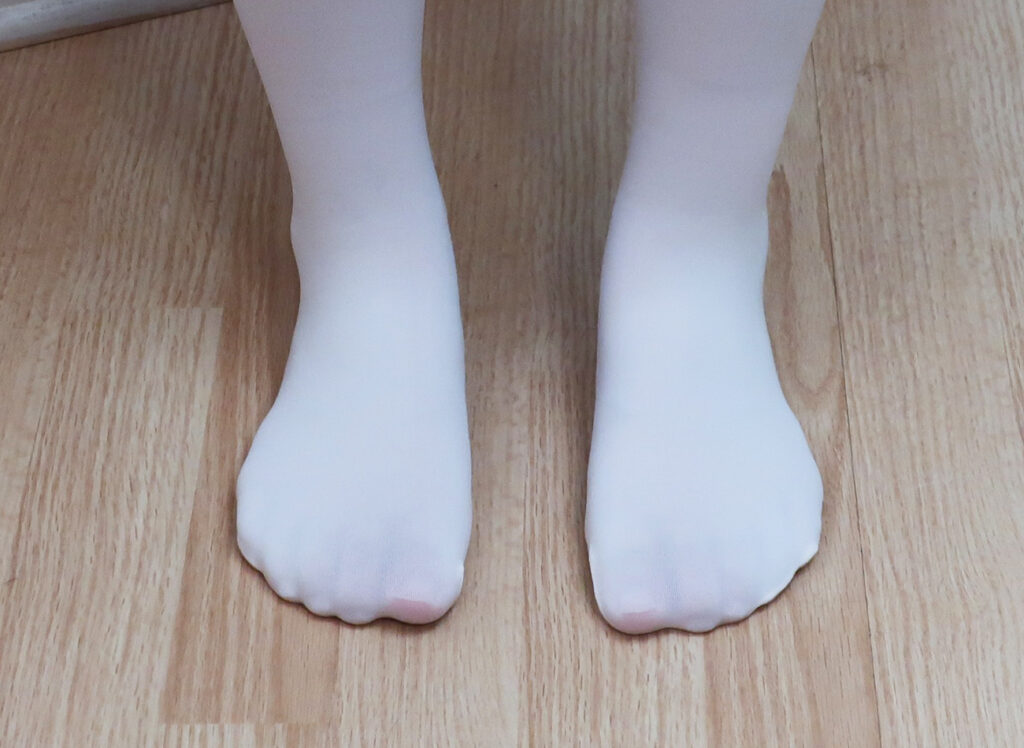
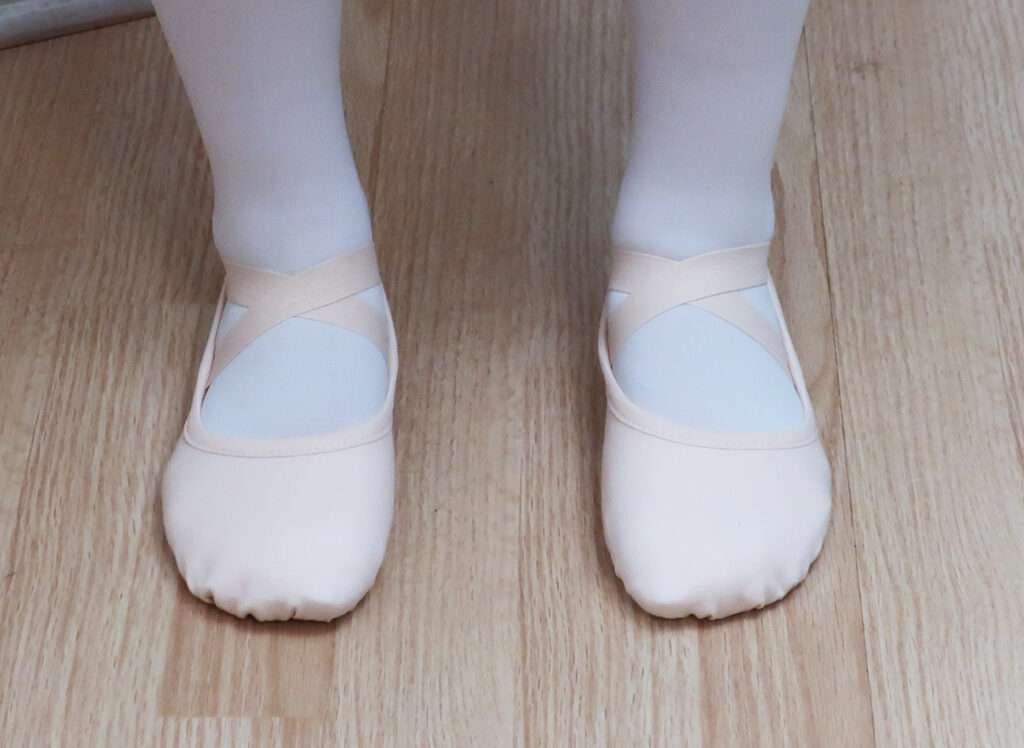
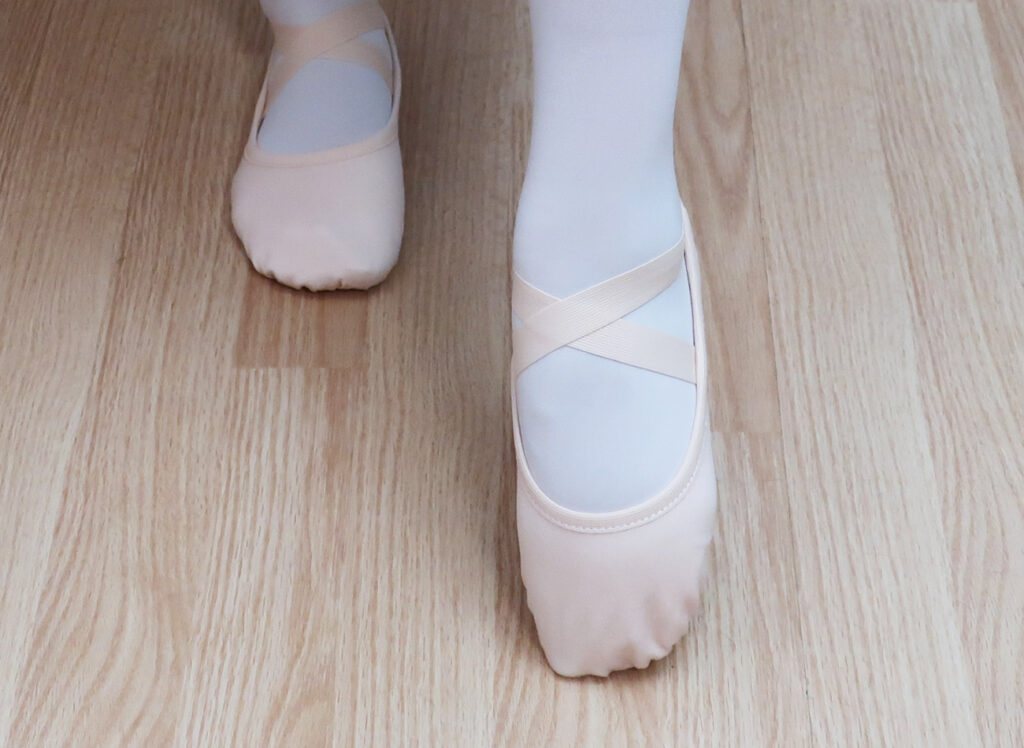
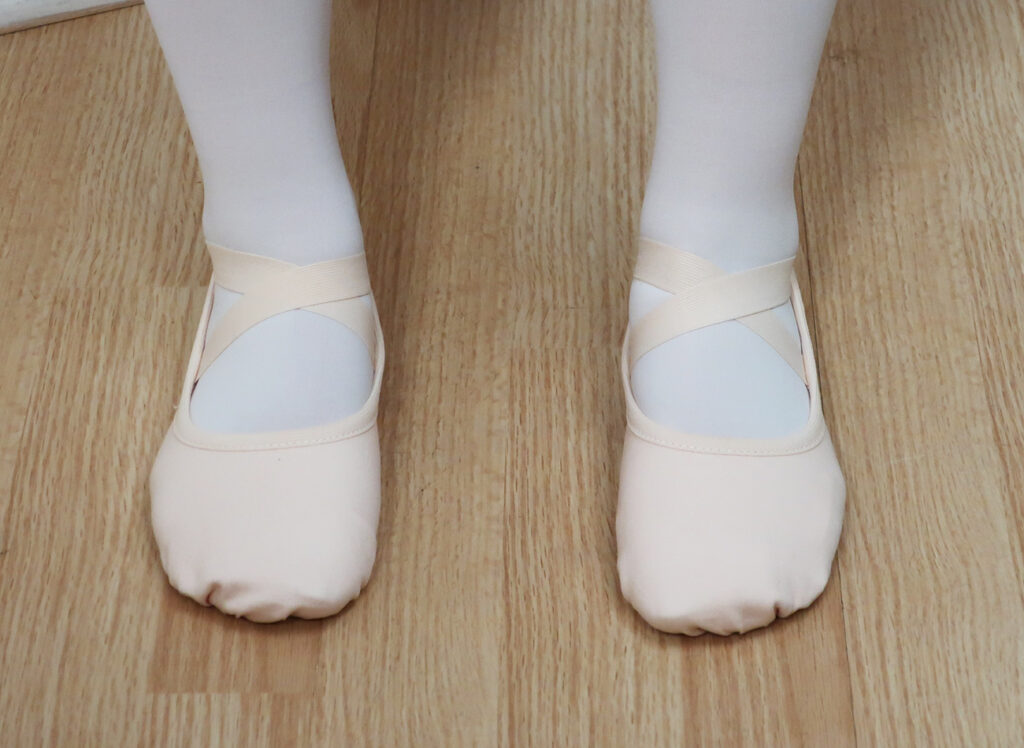
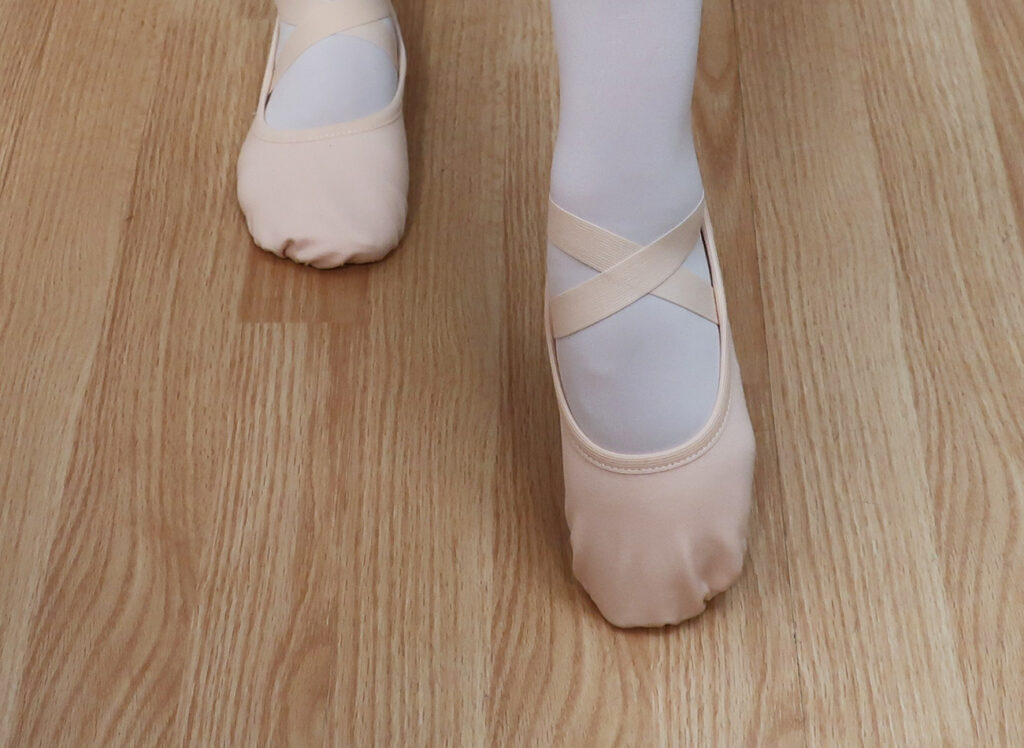
Thankfully, new materials like stretch canvas allow a looser fit without looking baggy. Models with more structure—such as Body Wrappers’ Model 250 and Gaynor Minden’s Liberty—let dancers go up a size while maintaining a sleek, fitted appearance. In the middle and right photo in the first row of images below, dancer Rose Hare wears a half-size bigger than Gaynor Minden recommends for its Liberty. You can see how the big toe is being pulled inward. In the bottom two photos, she wears a full two sizes above the recommended size. There, her toe alignment looks fine—and she can dance better.
The Bottom Line
Retailers need to lead the way in showing that new materials make old fitting standards obsolete. We can help dancers feel the difference of a looser fit right from the very first fitting. Have them do the rise test. Not only will they leave the store feeling more comfortable, they’ll dance better, safer, and healthier in class, onstage, and for the rest of their lives.
Gilbert Russell has been fitting pointe shoes for over 35 years. He also helps independent stores thrive through his book Retail AI Unleashed, coaching programs, speaking engagements, and weekly newsletter.