
Ask a dance teacher how they were trained and many can name the teaching body that certified them: the Royal Academy of Dance, the Imperial Society of Teachers of Dancing (ISTD), the Cecchetti Council of America. Ask a pointe shoe fitter the same question and the answer is usually some version of “I learned on the job.” As a fitter myself, I know how true that is. Most of us pieced our knowledge together from mentors, manufacturers, and years of trial and error. For a role that can shape whether a young dancer thrives on pointe or ends up injured, that is a striking gap.
There is no independent association that certifies pointe shoe fitters as recognized professionals the way teaching bodies certify teachers. What exists instead is a small handful of courses, most built by individual fitters who saw the gap and decided to fill it. The courses covered here differ in length, philosophy, price, and country, and none is a universal standard.
Juon Pointe, New Zealand
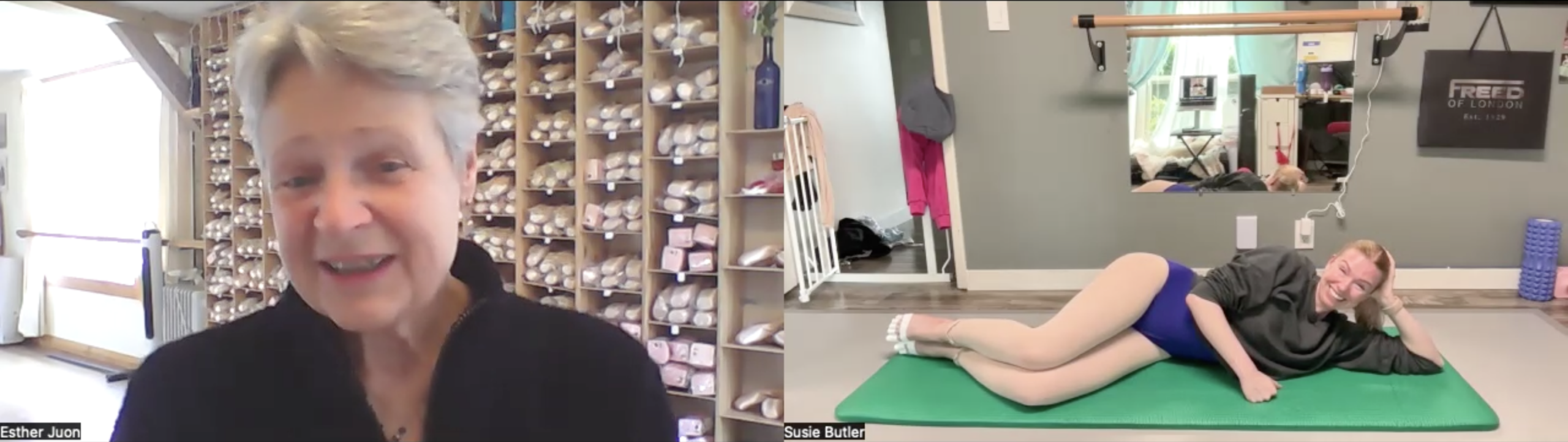
The lineage of much of today’s pointe-fitting education traces back to Esther Juon. Based in New Zealand, Juon has spent decades refining an approach that treats the fitting not as a transaction at the counter, but the last step of a much longer process.
Juon acknowledges that fitters can learn the brands, the models, and the widths and shanks on the shop floor, as well as how to give good customer service and how to recognise an obvious fitting problem. Yet her Juon Pointe Mentoring Programme also teaches practitioners how to understand basic anatomy and foot function, how the intrinsic muscles of the foot work, how to assess the whole dancer before selecting a shoe, and how alignment changes from flat to demi-pointe and then on pointe. The program runs over many months, with participants progressing at individual paces. The three stages of the Mentoring Programme are typically delivered live in weekly one-on-one Zoom sessions between 90 minutes and two hours. Juon watches each practitioner work the techniques on their own body and helps them discover more effective alignment and balance in real time using specific cues. She also shares short video clips between sessions for review. That format is what allows her to mentor practitioners across the globe, including in Spain, Germany, Australia, and the U.S.
“Unless a fitter truly understands the dancer, can see how they move, and recognizes whether they have been properly prepared for the demands of pointe work, they are simply matching a shoe to a foot rather than understanding what that dancer truly needs,” Juon says.
BalletPro, United Kingdom
In the United Kingdom, Esther Juon’s lineage runs directly through Amanda Hill. Managing director and founder of BalletPro, Hill developed the organization’s one-day fitting workshop in 2006. At the time she was the UK distributor for Grishko and had realized there was no training on offer to dance stores on feet or fitting—a gap with real consequences. “If a shoe isn’t fitted well, dancers can find pointe work painful or get injured, and their instinct is usually to blame the shoe rather than the fit,” she says.
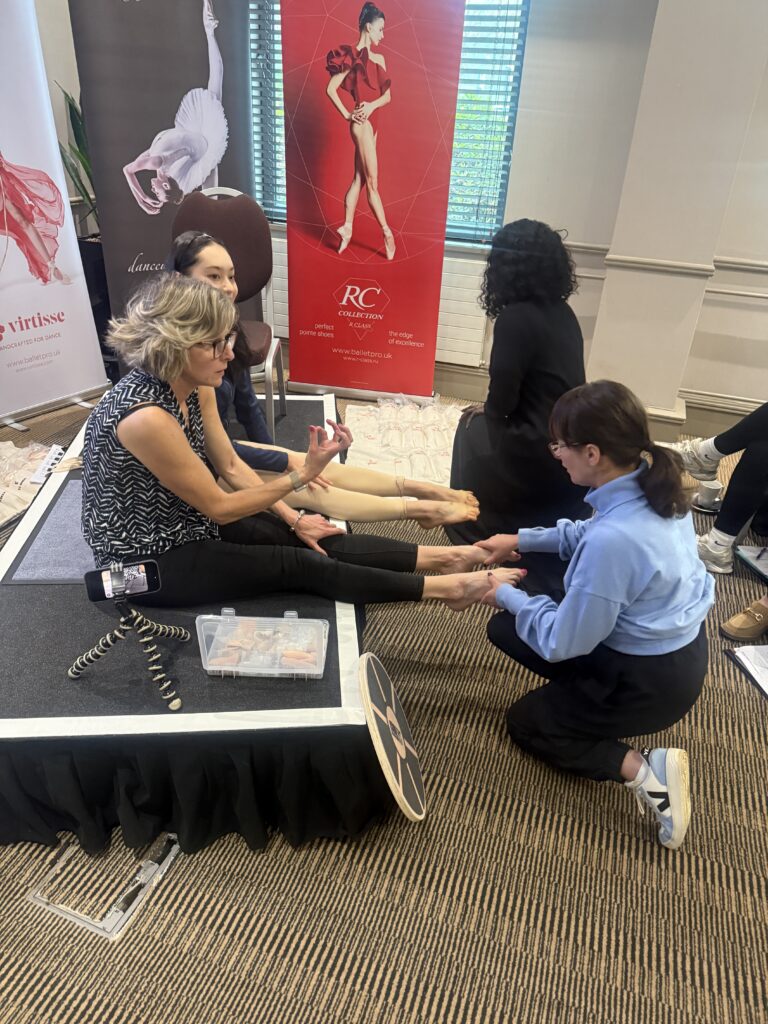
Hill drew on her education with Juon, further reading, and her own study and training of anatomy to build the workshop. In the years since, Hill has added to and refined it using the work of dance physiotherapist Lisa Howell; the International Association for Dance Medicine & Science’s resources, journal articles, and a conference she attended in Birmingham; and more. She now runs it in person two or three times a year, on Sundays (when most shops are closed), and she makes no profit from it. The day combines a two-part presentation with hands-on fitting demonstration, in which participants are invited to look, touch, feel, and be involved in the decision-making process.
For Nadja Straumann, who traveled from the Ballett Shop in Switzerland, the workshop offered something beyond the shoes themselves. “Next to fitting, there was a detailed and thorough introduction about the anatomy of the foot, assessment for pointe readiness, and exercises to improve the intrinsic foot muscles,” she says.
Hill is careful about what the day is and isn’t. Attendees receive a certificate of attendance, not a certification. She believes her workshop is among the most detailed ones available in the UK—physiotherapists and podiatrists have taken it and rated it highly—and thinks it could function as a preliminary qualification if a body existed to approve one.
“I always encourage people to attend once before starting fitting, then again after 6 to 12 months of fitting,” she says. “Even though the material is largely the same, they tell me they learn so differently on the second attendance, because they are coming at it from a different angle.”
The Pointe Shop—Progressive Pointe Method, United States
U.S. retailer The Pointe Shop’s Progressive Pointe Method, founded by Josephine Lee, runs in two tiers. The entry level, PPM Basic Training is a self-paced online course delivered through the dance-medicine platform DanseMedica, in cooperation with the company. Lessons are posted weekly over 12 weeks, with access to the materials for three months. It covers the anatomy of the pointe shoe, the anatomy of the foot as it relates to pointe, an overview of shoemakers and models, the analysis of common fit issues, and injury-prevention knowledge.
The Basic Training, the company states in its course materials, “is solely for educational purposes. It does not grant a license to use our trademark, provide certification, or lead to a listing on our website as a preferred fitter.” The PPM Certification Program is a separate, more demanding tier: an eight-month Certified Fitter Training program with limited spots, requiring the Basic Training tier as a prerequisite, attendance at an annual in-person intensive, and an entrance exam.
Nas Pontas, Brazil

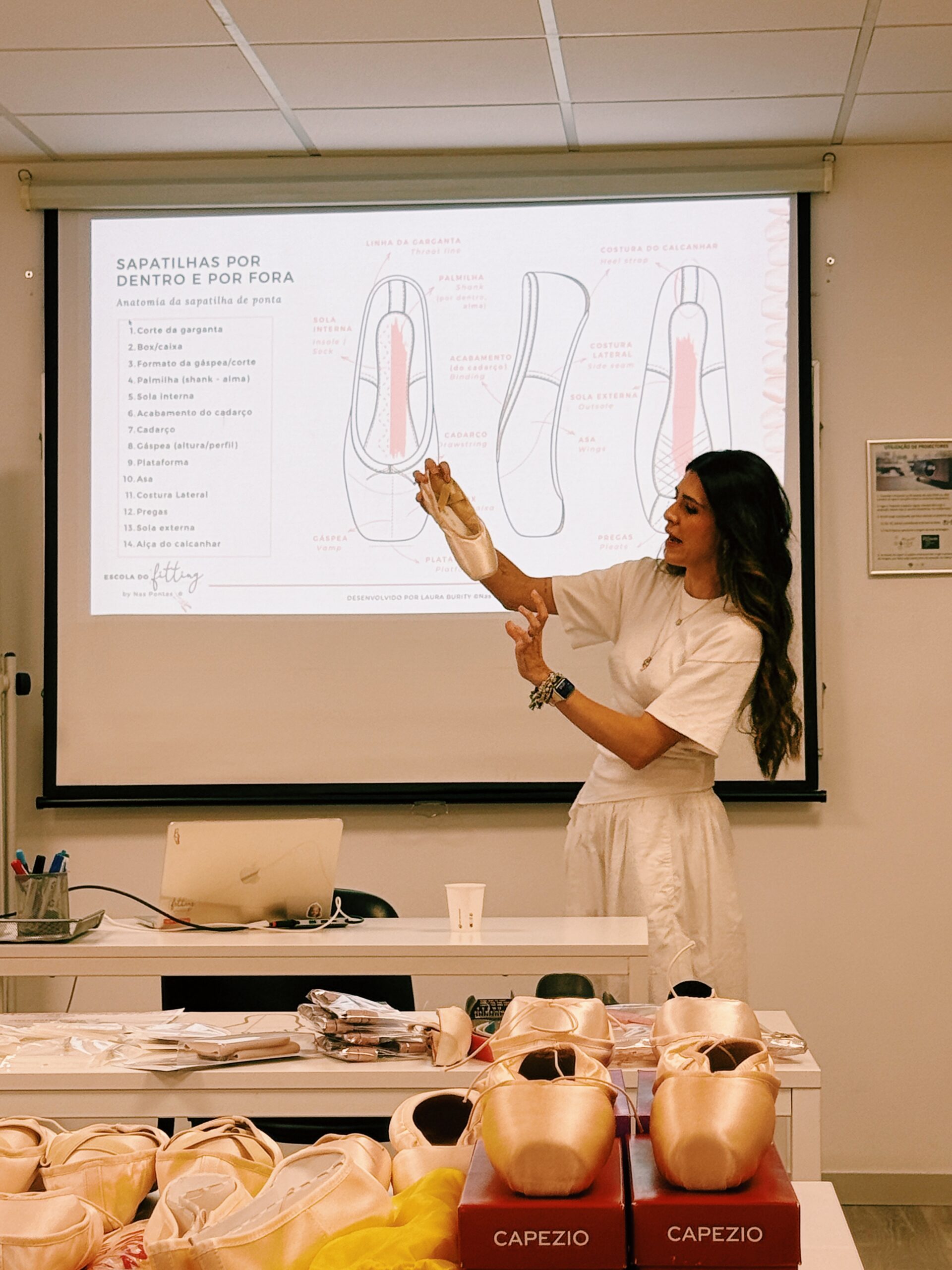
Brazil-based organization Nas Pontas’ fitting course grew out of Laura Burity’s conviction that fitter education could be about far more than just learning products. “Our course is different because it teaches students how to think, not simply what to recommend,” says Burity, a graduate in classical ballet teaching, who is currently pursuing a master’s degree in health sciences. Students study applied anatomy, foot morphology, biomechanics, injury prevention and pre-pointe preparation, alongside the history and technology of the shoes themselves.
Burity methodology is rooted in several experiences: She studied pointe shoes at the start of her Nas Pontas blog in 2015, and she developed a pre-pointe course in 2017. In 2018, Burity took a research trip to New York, where she visited some of the world’s leading dance stores. “Most conversations began with the shoe itself—its strength, its shape, its width,” she recalls. “Very few conversations began with the dancer. Nobody asked much about their history, their technical development, previous injuries, or where they were in their training journey.” Her guiding principle is that “the shoe must adapt to the foot, not the foot to the shoe.”
Nas Pontas is set apart by its academic standing. As Burity has become more involved in research, faculty at Brazil’s Faculdade FEX reviewed the Nas Pontas curriculum, its teaching objectives, and its structure, and the program was recognised as a university extension course recognized by Brazil’s Ministry of Education.
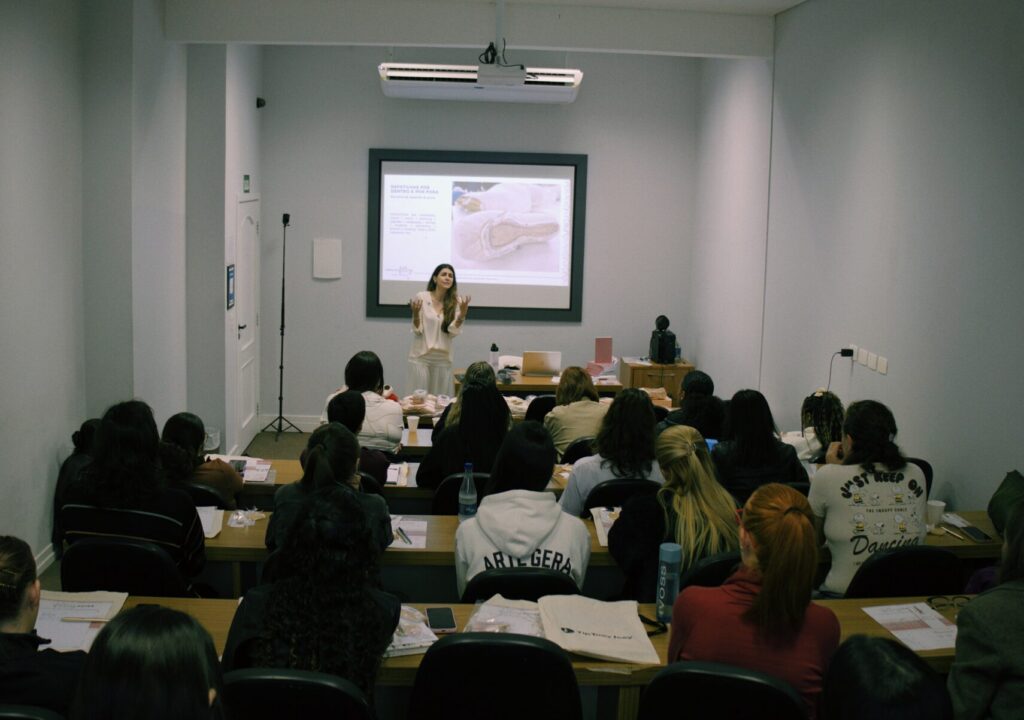
Burity’s ambitions are international. The training itself runs entirely online—about 30 hours of coursework, subtitled in more than 50 languages—with graduates working across Brazil, Latin America, North America, and Europe. This September, Nas Pontas returns to Europe for a second consecutive teaching tour through Portugal, Spain, France, and England. Those are in-person group workshops for dancers, teachers, and shop staff, carrying certificates of participation; Burity is clear that only the online course qualifies someone as a professional fitter.
The Bottom Line
For all their differences, the people running these courses want strikingly similar things. Juon’s long-term vision is for her program to become an internationally recognized, accredited educational pathway for anyone who works with and supports dancers, offering a consistent, evidence-informed standard. Hill would like to see an approval process for courses like hers, and, just as importantly, a standardized pre-pointe preparation process for teachers, with defined readiness tests before a dancer ever goes on pointe. Burity wants more scientific research and closer collaboration among manufacturers, healthcare professionals, educators, and fitters.
What none of them can point to yet is the thing teaching has and fitting does not: a single, independent body that sets the training standard and holds people to it. Until that exists, a dancer’s first experience on pointe still depends heavily on who happens to be kneeling in front of them with a shoe in hand—and on how far that person went to learn the job properly.
Jessie Reid is the owner of From the Top, a dance, cheer, and gymnastics boutique in Waco, TX, and a dance mom.