
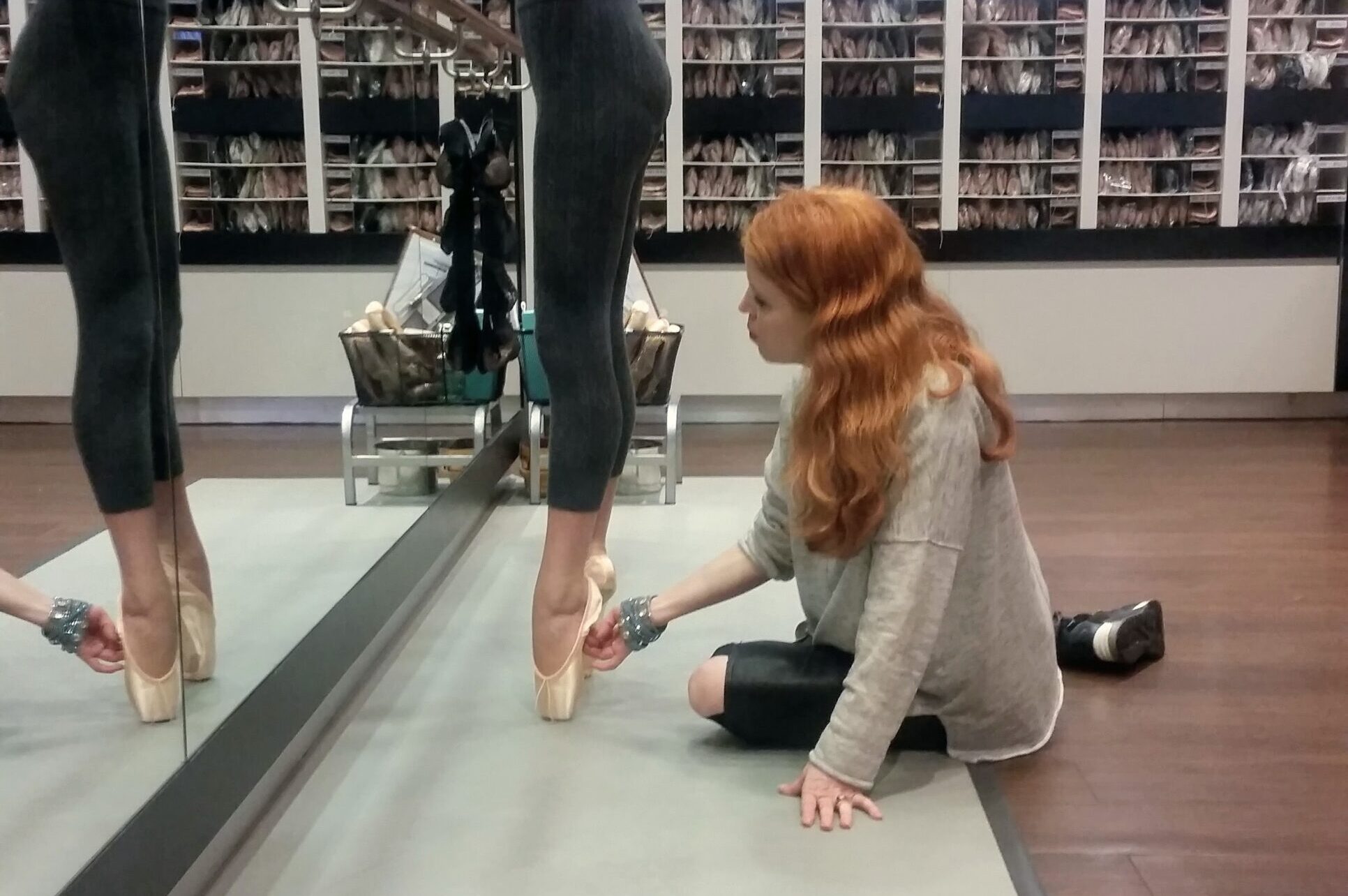
Fit Tip Friday is DRN’s new monthly column where pointe shoe fitters share their go-to advice. For our second installment, Mary Carpenter—pointe shoe expert, ballet teacher, and founder of the DancewithMary NYC YouTube channel—shares practical, cost-conscious advice for fitting dancers with different-sized feet. —Emily May, editor, Dance Retailer News
One of the biggest things I get asked about is what to do when a dancer has different-sized feet. To me, it’s a very different question for someone who is adolescent and just starting on pointe versus someone who is elite or moving from pre-professional to professional.
New-to-pointe dancers have to deal with so many variables. Everything is a big learning curve for them, so it is important to try and simplify. For advanced, pre-pro, and pro dancers, the feet have usually settled in their growth. The dancer understands what they need better and they are able to handle more complicated fitting shoes.
Adolescents’ feet don’t grow evenly; they play a bit of a catch-up game. I describe children like flowers—they’re going to bloom at different times. Some fitters will make young dancers get two different pairs of shoes to fit each foot correctly. But for a dancer of 16 or under, that’s ridiculous, especially now that it’s so costly due to tariffs. By the time the shoes are stitched a month later, or arrive if they’re on back order, the dancer will probably have outgrown them already. Then they’ll be stuck with two pairs of unusable shoes. Unless the dancer has an extreme difference in size, which happens infrequently, it is usually better to try a work-around and get them into something that they can function in.
My advice is: If the foot can tolerate it, fit the dancer in a pair of shoes to fit the larger foot and use two differently sized toe pads. After choosing the right shoe, I’ll usually do what I call micro-fitting, trying out different padding options. Someone once described it to me when they watched me fit. They said, “Oh, this is like going to get your eyeglasses adjusted—you ask if the option you provide them with is better, worse, or the same.”
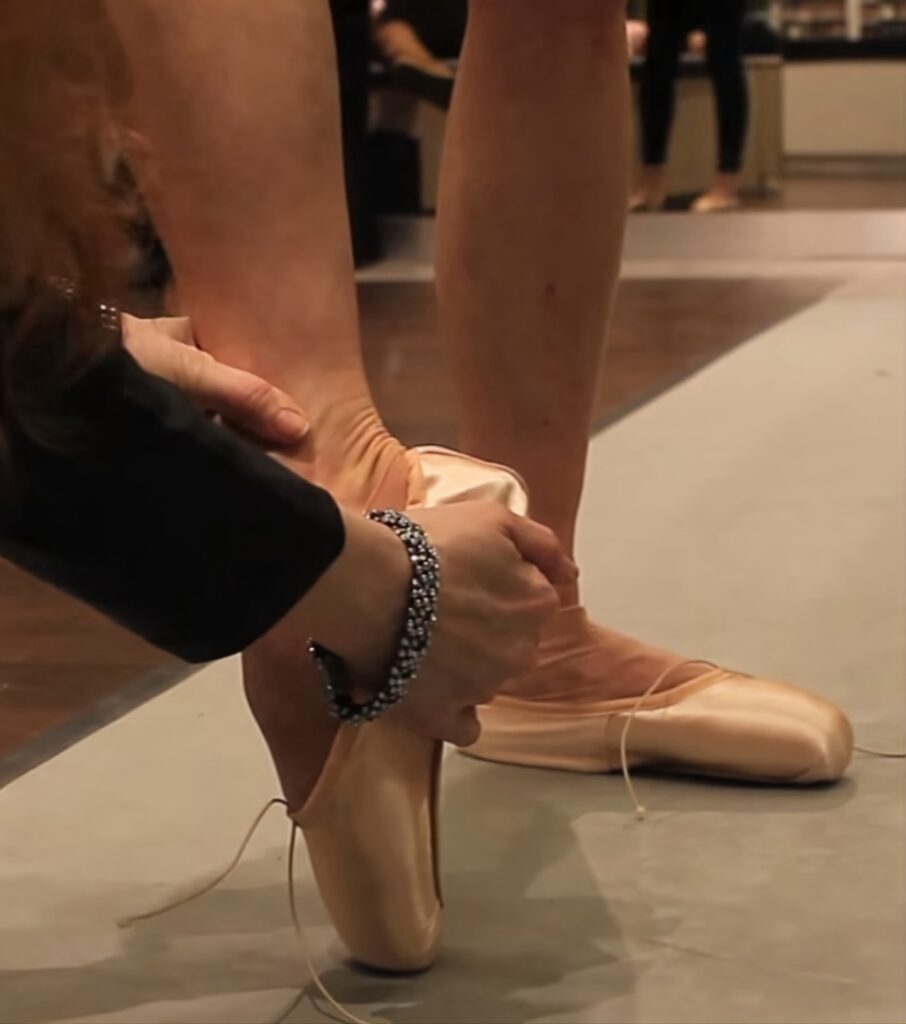
A dancer could even buy three different options of toe pads to take with them to class. They’re portable and relatively inexpensive compared to the cost of a pointe shoe. Kids can grow overnight sometimes, so if their feet change, they can just put in a different-sized pad.
When I worked at Capezio, parents would often come in asking for special orders. I’d say, “She’s 13—we’re not doing a special order. I don’t even want to talk about that until she’s 15 or 16, because that’s when the foot size settles.” For male dancers who dance on pointe, you have to wait until 16 or 18, because they hit their growth spurts later. Custom orders are possible for any dancer, but mainly for those on a serious track like YAGP, or pre-professional students.
There’s always a bump in cost with special orders. Is it more cost-effective than buying two pairs of shoes? Maybe it is now. Freed of London and Nikolay are pointe shoe companies that allow dancers to order just one custom pair at a time, but others usually have a minimum order. It’s not cost effective for them to pull one maker off the line just to make one pair. Young dancers really have to think about if they want to deal with that cost, the minimums, and the wait time. Sometimes it’s better to get stock shoes and customize them until a dancer really understands their feet, technique, level, and goals.
Mary Carpenter, a former dancer, is a pointe shoe expert, ballet teacher, and certified Pilates and Progressing Ballet Technique instructor based in New York City. She runs the YouTube channel Dancewithmary NYC, where she shares her knowledge on all things pointe shoes. You can read more about her story in this DRN article.