

The Iran war and the closure of the Strait of Hormuz, which is responsible for carrying roughly 20 percent of the world’s oil supply, has triggered the largest disruption in global oil market history. The effects are spreading through the world’s economy. How will these affect your dancewear store? What can you do to navigate the impacts?
Suppliers Feel the Squeeze
We live in a world that runs on oil, and dancewear suppliers are already feeling the impact as input costs continue to rise, from fabric and labor to shipping. This infographic shows the main effects.
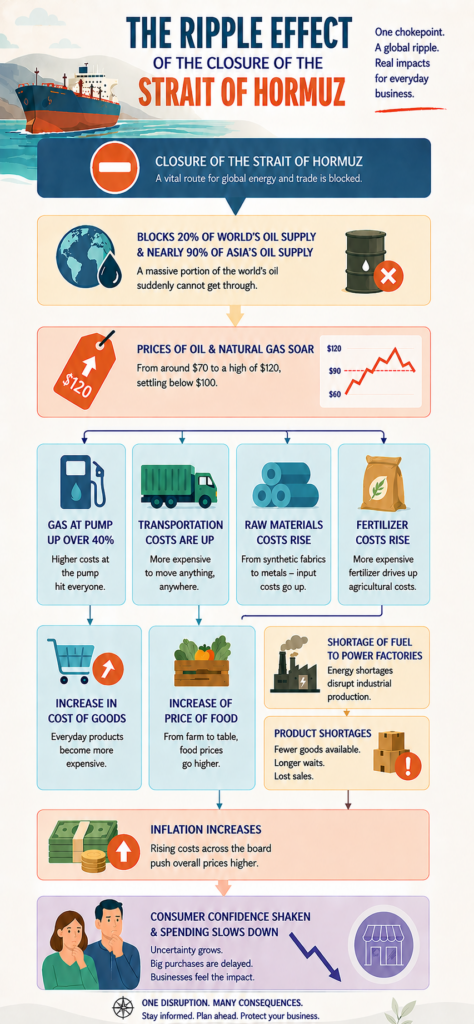
Luis Guimarães, CEO and founder of Portuguese dancewear brand Ballet Rosa, has seen shipping costs increase by up to 50 percent. Meanwhile, Só Dança Canada president Lisanias Ransan reports that even packaging costs have risen, with shipping boxes up around 10 percent.
The suppliers DRN spoke with would like to shield retailers from these increases, but they’re dealing with very thin margins. The pandemic, post-pandemic inflation, and tariffs have all eroded dancewear suppliers’ profits, according to Ransan. He says they’ll need to pass on some of the cost increases or put their businesses at risk.
When this will happen remains an open question. Guimarães feels it’s unethical to increase prices on orders that have already been placed, but he warns that increases will happen sooner rather than later.
For both suppliers and retailers, waiting out the crisis is not an option. The war isn’t likely to end soon. Even if it did, experts predict a disrupted oil supply well into 2027.
Recession Risk Rising

Price increases are coming, not just in dancewear but in everything your customers buy. Refueling a car now costs an estimated $740 more per year. That hurts. Consumers will start cutting back on purchases, and the trend of seeking value-priced goods will intensify.
It’s important to note that the U.S.—and to a lesser extent Canada—is in a “K”-shaped economy. Upper-income households are still spending, while middle- and lower-income families are feeling the pinch and cutting back. As a result, both premium and value-priced products may continue to perform well.
As consumers cut back on spending and businesses pull back on investment, there’s a chance of a worldwide recession. In a recession, it’s tough to maintain sales levels, and there’s a lot of downward pressure on prices. There’s also a chance of stagflation, which is the worst of both worlds: high inflation and slow sales.
Whatever the economy does in the short term, there’s no doubt that the next year will be challenging. So what can we do as dance retailers to continue to thrive?
How Retailers Can Respond

- Don’t panic.
In my experience, the dance business is fairly recession-proof. That doesn’t mean there won’t be challenges, but resist the urge to give big discounts to generate sales. Your costs will be going up; if you decrease your margins, profit may take too much of a hit.
- Lower your costs.
Go over your profit and loss statements line by line. What apps on Shopify don’t you need? Do you really need that premium internet plan? Shop your insurance around when it comes up for renewal. It’s going to be easier to save a dollar than to make one. Lowering your costs will be our key to remaining profitable.
- Tighten your inventory.
We retailers hate not having product available for customers. But in a tight market, trying to stock everything for everyone can become a liability. It’s going to be easy to have all our cash tied up in inventory, rather than sitting in the bank to pay bills. Figure out what your key items are and keep those in stock. For the remaining items, consider keeping only certain widths, only full sizes, or dropping them altogether. You can always order the missing size.
- Offer value-priced product.
We’ll all need to offer an option for the cash-strapped consumer. A good-better-best strategy of three price points can work well. The value-priced option is there for those who need it, but research shows that most will choose the middle option.
- Boost your marketing.
We’ll need to be marketing aggressively to get people into our stores. I don’t mean doing more on your social media: That’s great, but you’re preaching to the converted.
As spending slows, we’ll need to work hard to bring in new customers. Run low-cost ad campaigns in Google, on social media, and with your local media.
The Bottom Line
The next year won’t be easy, but if we’re smart and focused, we can still be profitable. And pull ahead of our competitors.
Gilbert Russell is a seasoned dancewear retailer who helps independent stores thrive through his book Retail AI Unleashed,coaching programs, speaking engagements, and weekly newsletter.