
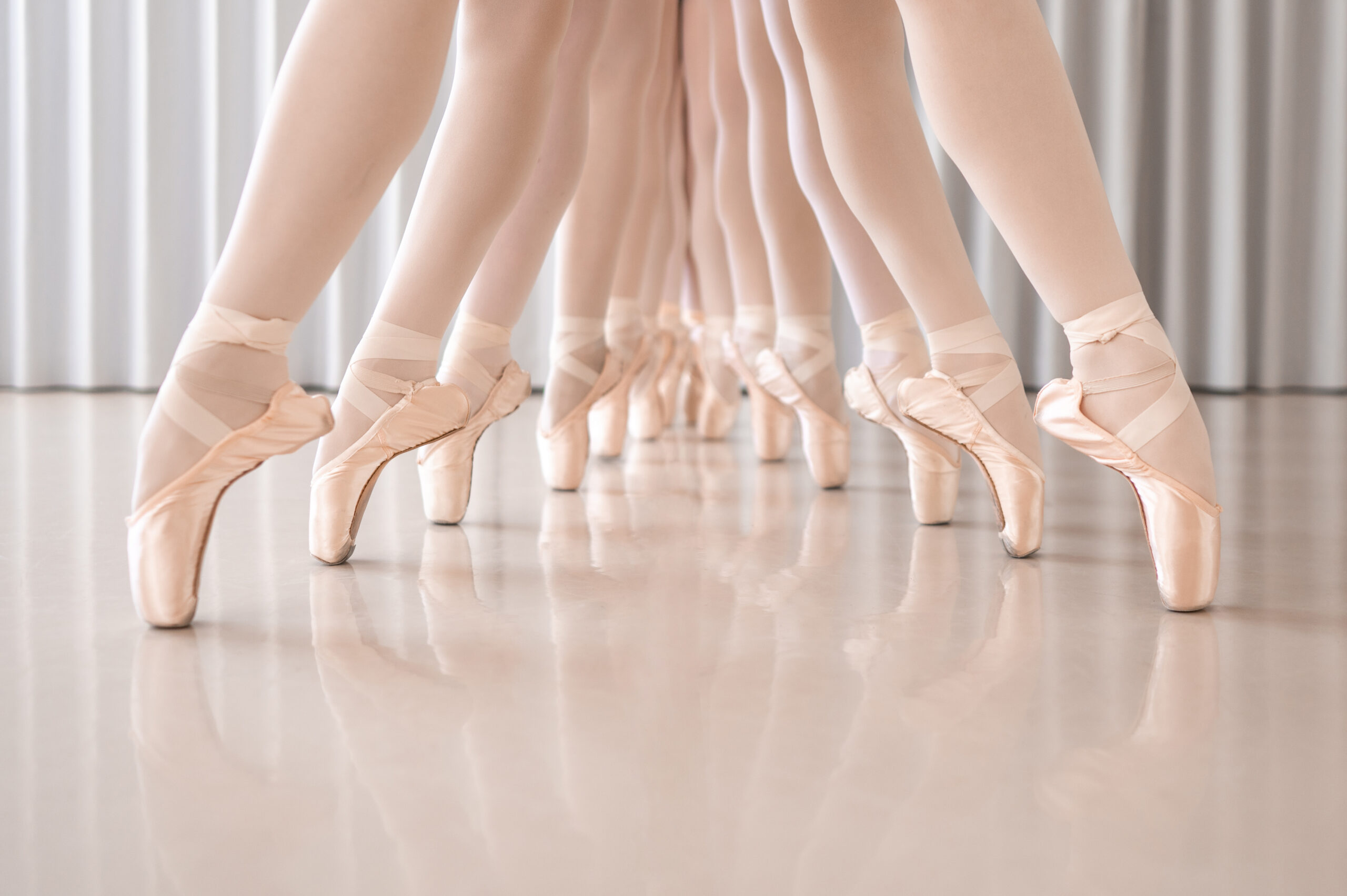
“When pointe shoes get this expensive, some people get priced out of dance entirely,” says Rhea Lwin, owner of On Pointe Dancewear in Bellevue, WA. “Others keep dancing on dead shoes or switch to cheaper alternatives that don’t fit well, just to stay in class.”
Lwin is referring to a challenge that many dancewear retailers are now grappling with: recently announced wholesale increases of 4% to 6% by R-Class U.S. and 15% by Suffolk. With retail prices for a single pair set to reach between $140 and $170 for each brand, the question isn’t whether customers will notice, but whether they’ll still buy.
Why Are Prices Rising?
DRN reached out to Suffolk and R-Class to understand what is driving these increases. Both cited rising costs as leaving them no choice but to raise wholesale prices. According to Keri Suffolk, co-owner of Suffolk, raw-material prices are “absolutely through the roof. The cost of some materials has tripled or quadrupled,” she says.
Shipping costs have also risen drastically. Natalya Balatsenko, founder of R-Class U.S., the distributor of three R-Class pointe shoe collections in the U.S., reports that they have “increased at least 15%, and in some cases 20%.” Meanwhile for Suffolk, a shoe that used to cost $1 to ship in now costs $5.
Tariffs Are Beginning to Bite
In addition to increases in production and shipping cost, these manufacturers are having to pay higher tariffs to import their shoes into the U.S.. Currently, R-Class, whose products are manufactured in Russia, is paying 47.5% in tariffs, while U.K.-based Suffolk is paying 25%. And neither manufacturer believes they qualify for a refund from the first round of tariffs, which were ruled illegal by the U.S. Supreme Court earlier this year. Suffolk says this is because the tariffs imposed upon them resulted from an agreement with the U.K. government; R-Class says there were no increases on tariffs on Russian products in the first round in 2025. According to Balatsenko, tariffs on R-class pointe shoes had remained at 35% since 2022. It wasn’t until February 2026 that an additional 10% was imposed in the second round of tariffs, followed by a further 12.5% in the third round, she says.
Despite all of these factors, both manufacturers were reluctant to raise prices, not wanting to hurt retailers or dancers. “The price increases [to our products] are less than the actual cost increases,” Balatsenko says. “[We] held off as long as possible.”
“I didn’t sleep for two weeks,” adds Suffolk, describing how she felt when considering the increases. When they were announced, Suffolk spent the whole day calling her retail partners. The reaction she received was uniformly positive. According to Suffolk, they felt “you wouldn’t do this if you didn’t have to.”
How Are Retailers Responding?
While On Pointe’s Lwin understands the economics behind the price increases, “it doesn’t make it easier to absorb,” she says. Lwin is concerned that “dancers who were already on the fence [about R-Class or Suffolk], or who fit well in a comparable model [from another brand], will start asking if the difference is worth $20 more a pair.” She worries that such dancers won’t go to a professional fitter to find a safe, similar, and, most importantly, cheaper pair.
While Lwin didn’t mention anything about the possibility of absorbing costs to alleviate pressures on dancers, she did note that the situation may affect how she approaches her inventory. “Higher wholesale costs directly affect how deeply a retailer can stock,” she says. “In this economy, every purchasing decision gets a closer look. I’m being more thoughtful about where I invest across my whole assortment, making sure every shoe on my wall earns its place, and truly serves the dancers who come to us.”
Manufacturers share similar concerns to retailers. Even so, Balatsenko says she feels R-Class is “providing a high-quality product at competitive prices.” Suffolk feels that customers know the value of their product and will be willing to pay the higher price, though she worries that cash-strapped mothers may no longer be able to afford their shoes.
Suffolk made the point that developing and stocking pointe shoes costs money, and that dancers and retailers will lose out if pointe manufacturers can’t stay viable. According to Suffolk, “When it comes down to it, we are protecting craftsmanship and the ability to get shoes when you need them.”
How Might Consumers Respond—and How Can Retailers Soften the Blow?
After years of price increases across many categories, consumers may be less surprised by another increase. Yet because dancewear is often treated as a discretionary expense, customers may react more strongly to these increases. Consumers value transparency, so it will be important for retailers to explain to their customers why prices have gone up.
Most importantly, retailers will need to explain the value of a professional fitting and the importance of wearing proper shoes. This information should be on store websites, in in-store brochures, and explained during each fitting. Retailers need customers to understand the work that goes into a pointe shoe and the care and expertise that goes into a fitting. If that is communicated properly, then, as Lwin says, “a dancer who leaves in the right shoe [will] feel the value of every dollar they spent.”
Gilbert Russell is president of Brio Bodywear, which has two brick-and-mortar dancewear stores in Ottawa, Canada. Through his consulting firm, No Qualms Retail, he shares his experience and knowledge with other independent retailers.